

Sensory Checklist for Developmental Concerns
Every child develops at their own pace—but when you notice bigger patterns (strong reactions to sounds, textures, food, lights, touch, or movement), it can be hard to know what’s “normal” versus something that needs support.
Developmental screenings and milestone guidance
based on your observations
Referrals when needed
such as occupational therapy, speech therapy, or feeding therapy support
Options like telemedicine
for convenient follow-up care
Support for Parents When Sensory Issues Affect Daily Life
If you’re a parent in Orlando, FL who’s seeing changes in learning, behavior, speech, social skills, or feeding, you’re not alone. Powers Pediatrics helps families make sense of developmental concerns through screenings, guidance, and referrals when needed—so your child gets support early.
Why Sensory Concerns Often Show Up in “Developmental Problems”
“Developmental problems” can include many areas of growth—communication, behavior, learning, motor skills, and social development. For many kids, sensory processing differences are part of what you see first.
- Be unusually bothered by everyday sounds or clothing seams
- Seek intense movement or sensation to feel regulated
- Have strong reactions to food textures or lighting
- Seem “overwhelmed,” “shut down,” or unusually irritable during routine transitions
These patterns don’t automatically mean autism, but they can be a meaningful clue—especially when they affect daily life or persist across settings.
If you’re noticing patterns, it can help to track what you see and discuss it with a pediatric team.
What Are Sensory Processing Issues? (In Parent-Friendly Terms)
Sensory processing is how the brain receives and organizes information from the body and environment. When sensory processing is “typical,” most kids can filter background input and respond in a flexible way.
When it’s not, a child may:
- Feel sensory input as too intense (hyper-responsive)
- Need extra input to notice or feel “just right” (hypo-responsive)
- Struggle with transitions because multiple senses shift at once
Autism Spectrum Disorder and Sensory Differences: What’s the Connection?
Parents often ask: “Could this be Autism Spectrum Disorder?”
Sensory differences can be part of Autism Spectrum Disorder, and many children with autism show:
- Sensory seeking (movement, spinning, touching specific textures)
- Sensory sensitivity (clothing, sounds, lighting, grooming routines)
- More difficulty with transitions and changes in routine
That said, sensory sensitivities can also occur in other developmental and behavioral conditions. The key is not to self-diagnose—but to pay attention to patterns and impact, then seek developmental guidance.
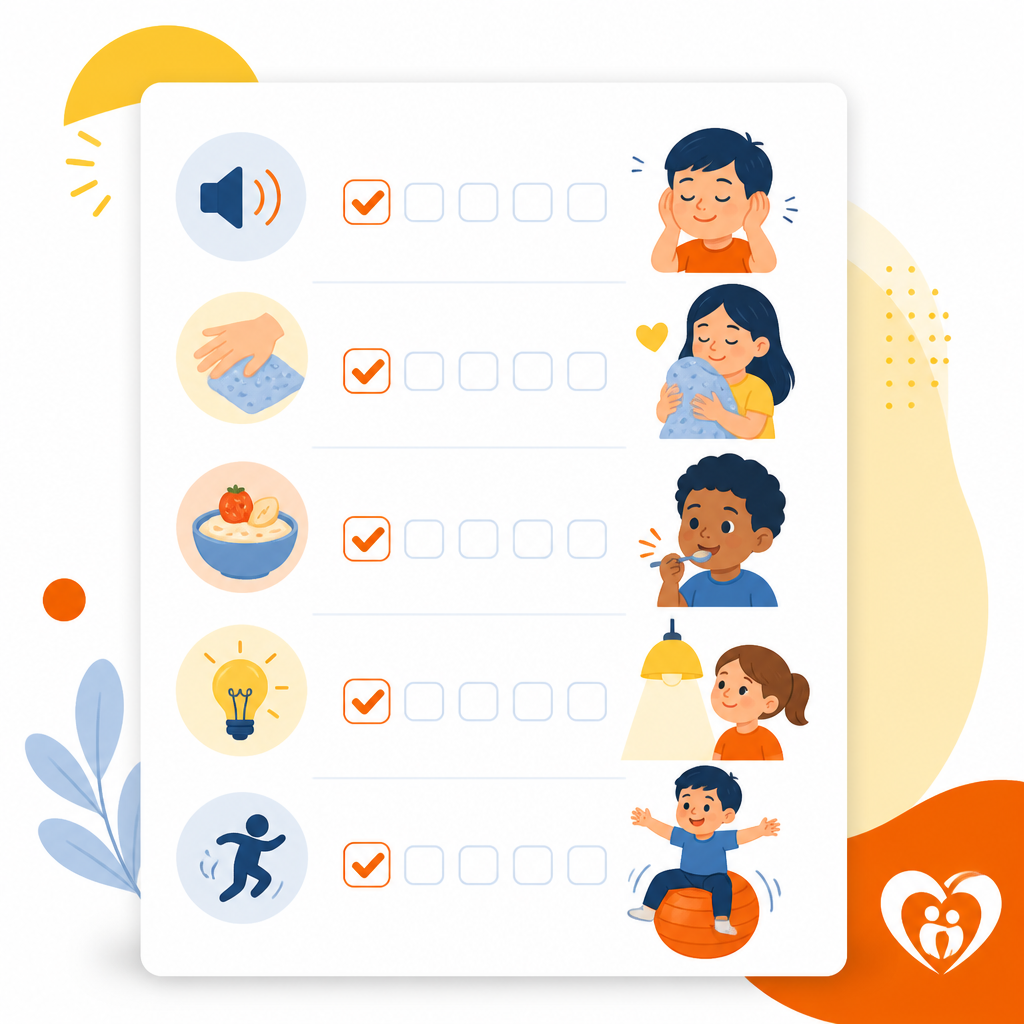
The Sensory Checklist Parents Can Use Today (Copy/Paste)
Use this sensory checklist to track what you notice at home, school, and during outings. Mark what’s happening and how often. Bring this list to your pediatric visit—it helps clinicians better understand patterns.
Sound Sensitivity
- Covers ears or becomes distressed by everyday noises
- Reacts strongly to vacuum, haircuts, traffic, or crowded rooms
- Seems to “mishear” or ignore you in noisy environments
Touch & Grooming
- Dislikes tags, socks, or certain fabric textures
- Avoids hair brushing, nail trimming, or tooth brushing
- Struggles with wiping after the bathroom, baths, or swimming
Clothing & Body Sensations
- Clothing feels “too tight,” “itchy,” or “uncomfortable”
- Gets upset with socks, shoes, waistbands, or layers
- Avoids certain clothing even if it’s weather-appropriate
Food Texture & Feeding
- Refuses mixed textures (sauces, crunch + soft together)
- Limits the range of acceptable foods (brand/shape/color preferences)
- Gags, grooms, or becomes very upset with certain textures
- Drinks differently than expected (only specific cups/temperatures)
Feeding Therapy may be helpful when sensory-based feeding challenges limit nutrition, growth, or family functioning.
Light, Visual Input & Screens
- Reacts strongly to bright lights, sunlight, or glare
- Finds busy visual environments overwhelming (stores, assemblies)
- Covering eyes, blinking, or “tuning out” in visual chaos
Movement & Vestibular Input
- Seeks spinning, jumping, swinging, pacing, or constant motion
- Avoids swings, stairs, heights, or movement games
- Becomes distressed with car rides, elevators, or sudden movement
Transitions & Daily Routines
- Meltdowns around leaving the house, bedtime, school drop-off
- Struggles with changes to routine—even small ones
- Calms only with specific sensory inputs (crashing, rocking, screen, pressure)
Overall Impact
- Sensory responses happen in more than one setting
- Episodes last longer than expected or are escalating
- School performance, sleep, or family life is affected
Tip: If you can, note what happened right before the reaction and what helped.
Milestones: What to Watch for Across Development (By Area)
Parents don’t need to memorize every milestone—but knowing what’s typical helps you recognize when to check in.
If you’re also noticing sensory concerns alongside developmental changes, consider whether your child is showing delays or differences in:
Communication & Speech
- Limited back-and-forth interaction (gestures, pointing, sharing)
- Difficulty understanding simple directions
- Speech regression or reduced clarity compared to earlier months
- Using words but struggling to communicate needs
Social Development
- Limited eye contact or difficulty connecting socially
- Reduced interest in shared activities or games
- Challenges with play skills (especially flexible play)
Learning & Behavior
- Frequent extreme reactions to routine situations
- Trouble with attention during familiar tasks
- Avoidance of activities due to sensory discomfort
Motor Skills
- Clumsiness, frequent falls, or unusual movement patterns
- Difficulty with fine motor tasks (buttons, zippers, utensils)
- Poor coordination or unusual posture
Adaptive Skills (Everyday Independence)
- Difficulty with dressing, grooming, toileting routines
- Strong need for sameness to get through daily tasks
If any of these areas are changing—especially alongside sensory challenges—it’s worth discussing with a pediatric team.

When to Talk to a Pediatrician (A Simple “Don’t Wait” List)
Consider scheduling developmental guidance soon if:
- The sensory issue is interfering with school, sleep, feeding, or safety
- Your child seems to be getting worse over time (not just having “bad days”)
- You’re seeing regression (skills lost after previously developing them)
- Feeding becomes restrictive enough to impact nutrition, growth, or hydration
- You’re worried about communication, social connection, or behavior changes
- The reactions feel out of proportion to the situation and occur often
A key takeaway: early guidance doesn’t mean you’re “overreacting.” It means you’re being proactive.
Common Parenting Mistakes to Avoid When Sensory Issues Are Present
Many parents try hard—yet certain approaches can unintentionally increase stress. Here are common pitfalls and what to do instead:
Forcing through discomfort
If clothing, grooming, or certain foods trigger intense distress, pushing can build fear. Aim for gradual, supportive exposure rather than “just tolerate it.”
Using punishment for sensory-driven behavior
If a child is overwhelmed, consequences don’t teach regulation skills. Instead, focus on coaching replacement behaviors (what to do when overwhelmed).
Waiting too long to seek help
Sensory patterns often become more entrenched if strategies aren’t tailored early. Developmental support can reduce strain for the whole family.
Comparing to other children
Two kids can look “the same” on the outside but process input very differently. Track your child’s patterns and impact.
Assuming it’s “just behavior”
Sensory and developmental factors can drive behavior. Getting an evaluation helps separate willpower from nervous system needs.

Feeding Therapy: When Sensory-Based Eating Gets in the Way
Many families experience feeding challenges that are sensory-related, such as:
- Limited food variety due to texture intolerance
- Difficulty transitioning between preferred foods
- Gagging, refusing bites, or anxiety during meals
- Long mealtimes that disrupt daily routine
Feeding Therapy (often through occupational therapy and/or speech-language support, depending on the need) may target:
- Oral-motor coordination
- Tolerance of textures and gradual expansion
- Mealtime routines that reduce pressure and improve skills
- Caregiver coaching to build progress at home
If your child’s feeding concerns are affecting growth, hydration, or daily harmony, don’t wait. A pediatric evaluation can help determine whether the issue is mainly sensory, developmental, medical, or a combination.
What You Can Do at Home Between Visits (Practical, Parent-Friendly)
Reduce Sensory Overload
- Use softer lighting or hats/visors for bright environments
- Offer noise-canceling headphones in loud places
- Keep routines consistent during transitions
Build Predictability
- Use simple visual schedules (even for younger kids)
- Give “first/then” prompts before leaving, bedtime, or grooming
Support Clothing Comfort
- Try tagless tops, seamless socks, or softer fabrics
- Allow choices when possible (approved items your child tolerates)
Use Calm, Regulating Inputs
- Create a “calm corner” with preferred sensory tools
- Consider heavy work/pressure activities if your child responds well
Practice “Small Wins,” Not Battles
- Try bite-size exposure (tiny amounts) rather than full servings
- Focus on tolerance first—then increase variety gradually
Tip: If at-home strategies aren’t reducing distress over time, that’s a strong reason to get professional support.
How Powers Pediatrics Helps (Orlando, FL Families)
At Powers Pediatrics, we provide family-centered pediatric primary care and developmental guidance for children from newborns through young adults. If you’re noticing developmental concerns—including sensory differences—we can help you take the next step with confidence.
What to expect:
- Developmental screenings and milestone guidance based on your observations
- Supportive guidance for next steps at home
- Referrals when needed (such as occupational therapy, speech therapy, or feeding therapy support)
- Collaboration around related medical factors that may contribute to symptoms
- Options like telemedicine for convenient follow-up care
Goal: help your child get the right support early—while helping your family feel heard and supported.
We also offer practical services many families need alongside developmental concerns, including:
- Sick visits and preventive care
- Immunizations and physicals
- Allergy testing (when appropriate)
- Cold/flu testing
- Same-day appointment options, walk-ins, and online appointment requests
- Patient portal access and care coordination
Frequently Asked Questions
Is a sensory checklist enough to diagnose Autism Spectrum Disorder?
No. A sensory checklist helps you organize patterns to discuss with a pediatric team. Diagnosis requires a full developmental evaluation.
What if my child is “mostly fine” but has intense sensory moments?
That still matters—especially if episodes are frequent, escalating, or affecting learning, sleep, feeding, or safety.
Can feeding issues be sensory-based?
Yes. Many children struggle with food texture, chewing comfort, or oral-motor coordination. Feeding Therapy can address these challenges.
Should we rule out medical causes first?
Sometimes. A pediatric evaluation can consider contributing factors (including allergies or other health issues) while also addressing developmental needs.
How do I prepare for my appointment?
Bring:
- Your completed sensory checklist
- Examples of what triggers reactions and what helps
- Any feeding notes (accepted foods, textures, gagging/refusal)
- Questions about milestones or therapy options
Take the Next Step With Family-Centered Care
If you’re worried your child may not be meeting developmental milestones—or you’re seeing changes in learning, behavior, speech, social skills, or feeding—support is available.
Schedule a developmental guidance visit with Powers Pediatrics to discuss your concerns, review milestone expectations, and create a plan for next steps.
Because every child develops at their own pace—but early guidance matters.