

Orlando Pediatric Asthma & Lung Care for Families
Breathing problems can feel scary—especially when your child is wheezing, coughing at night, or struggling to bounce back from a cold. Powers Pediatrics provides compassionate, family-centered care for children with acute and chronic respiratory concerns, including asthma and recurring lung symptoms.
From same-day sick visits to ongoing condition management, we help Orlando families get trusted pediatric evaluation and treatment—so your child can feel better today and stay healthier long term.
Book an appointment online or request a same-day visit. We accept Medicaid and most major insurance, offer walk-ins and telemedicine, and provide ongoing support through our patient portal.
From same-day sick visits to ongoing condition management
We accept Medicaid and most major insurance
We offer walk-ins and telemedicine
Book an appointment online or request a same-day visit.
Respiratory & Asthma Care for Every Stage of Childhood
Kids don’t always experience breathing problems on schedule. Sometimes symptoms show up suddenly (a bad cold, wheeze, fever). Other times they build over time (persistent cough, recurring respiratory flares, nighttime symptoms, exercise-related trouble breathing).
Whether your child needs quick evaluation for a new cough—or a clear, step-by-step plan for asthma—Powers Pediatrics is here to guide you.
Conditions We Treat
At Powers Pediatrics, we evaluate and manage a wide range of pediatric respiratory and asthma-related issues, including:
- Asthma (new diagnosis or ongoing management)
- Recurrent wheezing and “reactive airway” symptoms
- Persistent cough (including cough that lasts weeks or returns repeatedly)
- Breathing trouble with colds or seasonal changes
- Allergy-related symptoms that can worsen respiratory issues
- Shortness-of-breath episodes that need careful assessment
- Suspected pneumonia or bronchitis (evaluation and treatment planning)
- Exercise- or night-related breathing symptoms
- Atopic connections (asthma often overlaps with eczema and allergic conditions)
If you’re unsure whether your child’s symptoms are “just a cold” or something more, we’ll help you sort it out.
How We Evaluate Breathing Problems
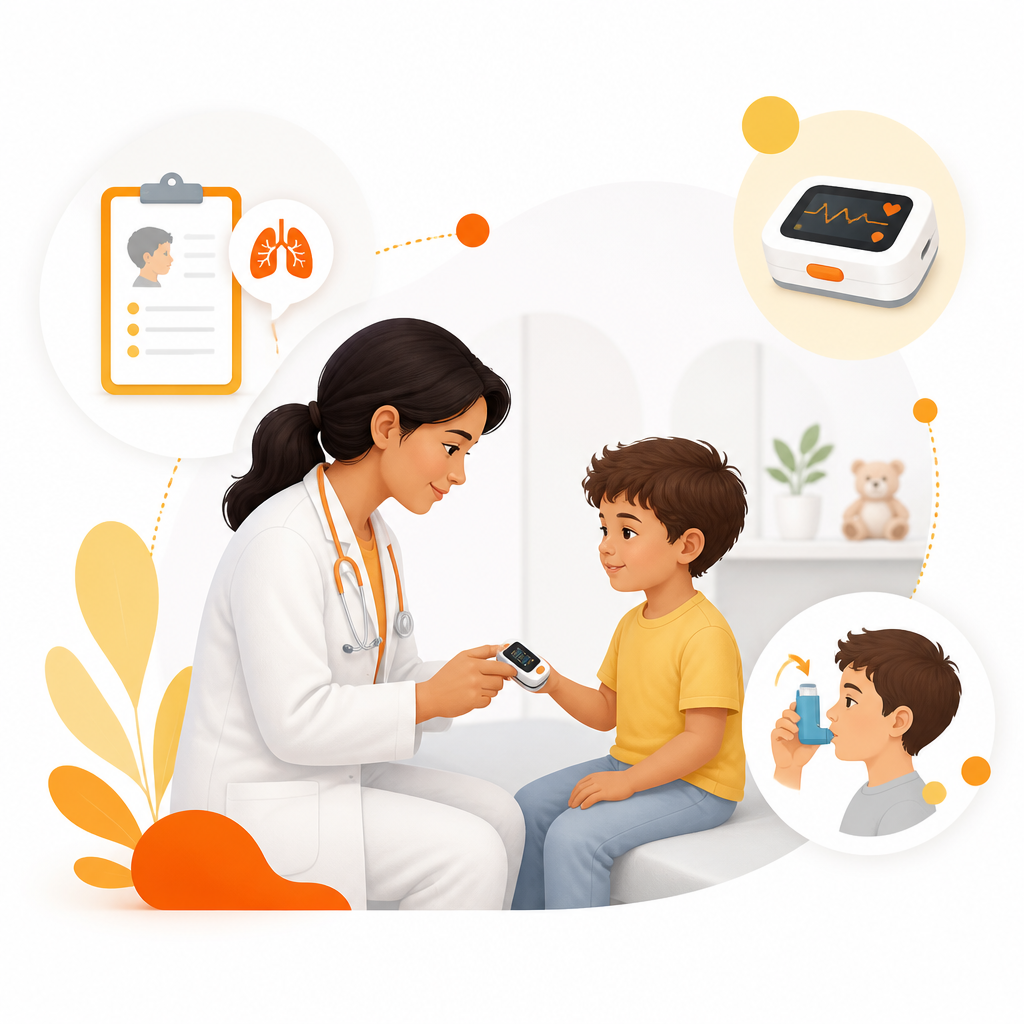
When you bring your child in, we focus on getting clarity—not just quick symptom relief. Typical evaluation may include:
- Detailed symptom history (timing, triggers, nighttime symptoms, exercise effects)
- Physical exam with attention to breath sounds and oxygenation
- Breathing assessment and careful listening for wheeze/air movement patterns
- Pulse oximetry when appropriate
- Age-appropriate lung function testing (when suitable)
- Medication review (including inhaler/spacer technique)
- Allergy considerations and testing when it could change the plan
- Cold/flu testing or other testing when illness-related triggers are suspected
- Care coordination if advanced testing or referrals are needed
We’ll also help you understand what’s likely happening and what to do next—step by step.
Warning Signs of Lung Disease
Some breathing symptoms deserve urgent attention. If you notice any of the signs below, contact us right away—or seek emergency care depending on severity.
Seek emergency care (call 911) if you see:
- Blue or gray lips/face
- Severe trouble breathing (working hard to breathe, struggling to speak/cry)
- Fast breathing with worsening fatigue or confusion
- Chest retractions (skin pulling in around the ribs/neck with breaths)
- Your child becomes unusually sleepy or difficult to wake
- No improvement after using a rescue medication as instructed (if prescribed)
Call us promptly if you notice:
- Wheezing that keeps returning or is getting worse
- Cough that won’t go away (especially if persistent beyond a few weeks)
- Nighttime cough or cough that interrupts sleep
- Repeated respiratory infections or frequent “bronchitis-like” episodes
- Symptoms triggered by exercise, smoke, dust, pets, or seasonal allergens
- Frequent need for rescue inhaler/reliever (if your child has one)
If you need to contact us, you can call us right away. You know your child best. If something feels off, trust your instincts and reach out.
Treatment & Ongoing Management (Acute + Chronic)
For sudden symptoms (same-day sick support)
If your child is wheezing, coughing, or struggling after a cold, we’ll help determine whether it’s:
- an uncomplicated viral illness,
- a flare of asthma/reactive airways, or
- another condition that needs targeted treatment.
For long-term control (asthma and recurring symptoms)
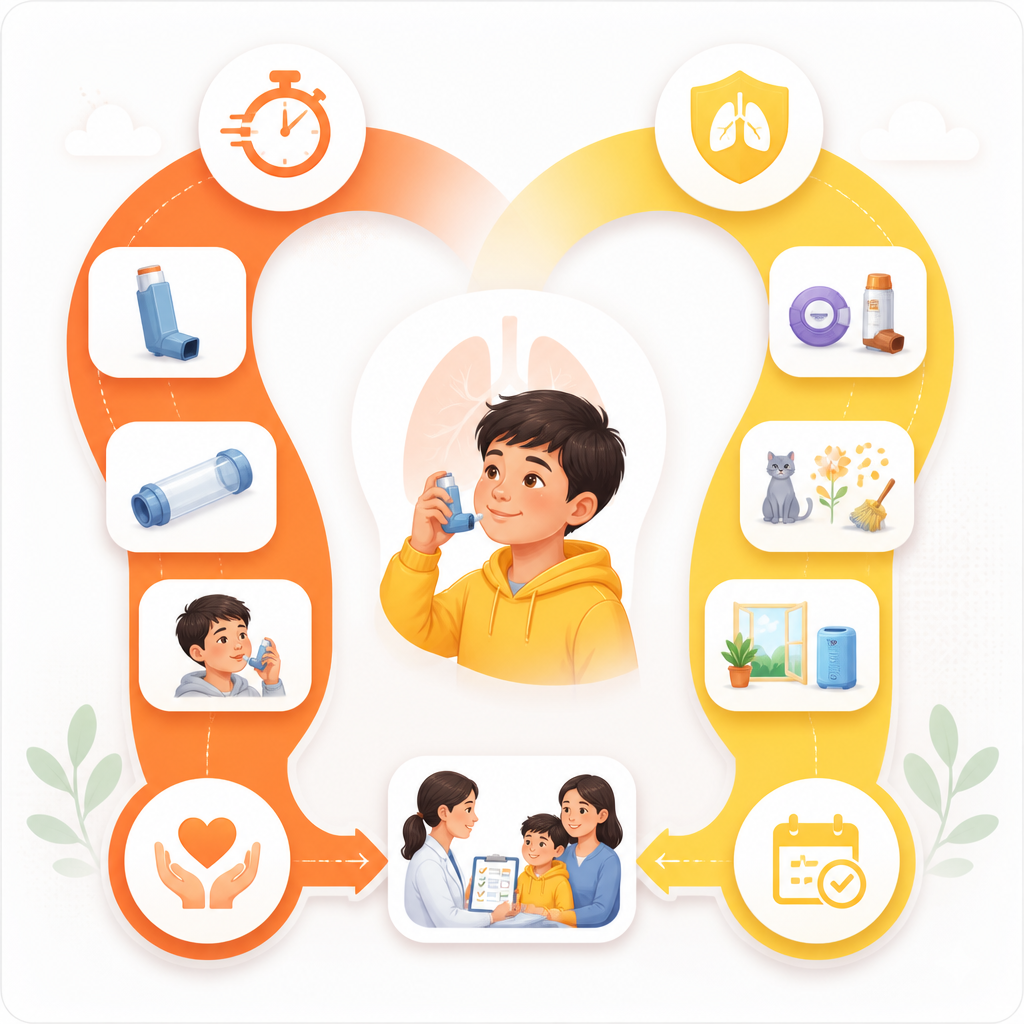
For chronic respiratory needs, our goal is fewer flare-ups and more predictable daily breathing. Treatment plans may include:
- Controller medications (when appropriate) to reduce airway inflammation
- Rescue medication instructions for symptom spikes
- Spacers and inhaler technique coaching to improve medication delivery
- Personalized trigger guidance (home environment and seasonal factors)
- School and activity support planning when symptoms can affect attendance or sports
- Follow-up planning to track response and adjust the approach
Many families benefit from a structured plan—so you’re not wondering what to do at 2 a.m. when cough and wheeze return.
Why Early Asthma & Respiratory Evaluation Matters
Respiratory symptoms often have triggers and patterns—airway inflammation, infections, allergies, irritants, and more. Medical literature (including work published in Ann Am Thorac Soc) emphasizes that timely evaluation and good management can help reduce flare-ups and improve day-to-day breathing.
In addition, community research and reporting (for example, a National Jewish community asthma program) show that increasing access to care and follow-up helps families seek treatment earlier for children with asthma.
At Powers Pediatrics, we make evaluation approachable and actionable—so families aren’t left guessing.
Asthma Action Plan: What You Can Expect
We help families build an asthma action plan that makes breathing crises easier to manage. You can expect guidance on:
- What symptoms mean “mild vs. worsening”
- Which medications to use and when (based on your child’s plan)
- When to contact us during flare-ups
- When to seek urgent or emergency care
We also make sure you understand how to use inhalers correctly—because technique can be the difference between “it should work” and “it actually works.”

Managing Triggers at Home (Practical, Family-Friendly Steps)
Asthma often improves when triggers are reduced. Based on trusted asthma guidance (including education from organizations like the Lung Association), common trigger strategies include:
- Avoid smoke exposure (including vaping and secondhand smoke)
- Reduce dust mites with bedding and cleaning routines
- Watch for mold and moisture issues
- Consider pet/allergen factors if symptoms correlate
- Manage seasonal allergies with clinician-guided treatment
- Use air circulation and cleaning practices that are safe for your household
We’ll tailor recommendations to your child’s symptoms and living environment.
Telemedicine + In-Person Care
Respiratory care shouldn’t be hard to access. If appropriate for your child’s needs, we offer telemedicine for follow-ups, symptom check-ins, and plan reviews—especially between visits.
For breathing concerns that require an in-person exam, we’ll see you as soon as possible with same-day availability and walk-in options when available.
Frequently Asked Questions
1 How do I know if my child’s cough is asthma?
Asthma-related cough often:
- comes and goes,
- worsens at night or with activity,
- follows colds,
- or recurs repeatedly over time.
We can evaluate patterns, triggers, and exam findings to help determine next steps.
2 Can children be diagnosed with asthma more than once?
Diagnoses can evolve as patterns and testing change. If your child’s symptoms shift or worsen, we’ll update the plan and explain why.
3 What if my child doesn’t wheeze during the appointment?
That’s common. We focus on overall history (night symptoms, triggers, frequency), exam findings, and response to prior treatment to guide care.
4 Do inhalers work if technique isn’t perfect?
They can’t work as intended without proper technique. We’ll teach you how to use inhalers and spacers correctly and confirm understanding.
5 Is allergy testing helpful for asthma?
Sometimes. If allergies appear to trigger breathing symptoms, testing and targeted treatment may improve control.
6 When should I worry enough to go to urgent care or the ER?
Use the Warning Signs of Lung Disease section above. If breathing is difficult, lips look blue/gray, or symptoms are severe/worsening, seek urgent/emergency care.
Why Families Choose Powers Pediatrics
- Family-centered pediatric care from newborns through young adults
- Serving Orlando since 2008
- Same-day appointments, walk-ins, and online appointment requests
- Telemedicine for convenient follow-up when appropriate
- Medicaid and most major insurance accepted
- Comfortable, caring guidance for both sudden sickness and long-term conditions
Ready for Trusted Pediatric Respiratory Care?
If your child is dealing with asthma symptoms, wheezing, persistent cough, or recurring respiratory issues, you don’t have to wait and guess. Powers Pediatrics can help you get answers and a clear plan.
Request a same-day appointment or book online today. If you’re worried about severe breathing symptoms, seek emergency care right away.