

Fine Motor Skills in Children, OT & Dysgraphia
Every child develops at their own pace—but when you’re seeing ongoing trouble with grasping objects, using utensils, drawing, writing, buttoning clothes, or tying shoes, it’s natural to worry.
At Powers Pediatrics, we help families in Orlando, FL understand fine motor skill development, recognize potential concerns early, and connect to the right next steps—whether that’s guidance, screening, or referral to support services like occupational therapy (OT).
Understand fine motor skill development
Support that helps you make sense of what you’re noticing and how fine motor skills build over time.
Recognize potential concerns early
If you’re wondering, “Is this normal?”, we’ll help you sort it out together.
Connect to next steps
Guidance, screening, and referral to support services like occupational therapy (OT) when appropriate.
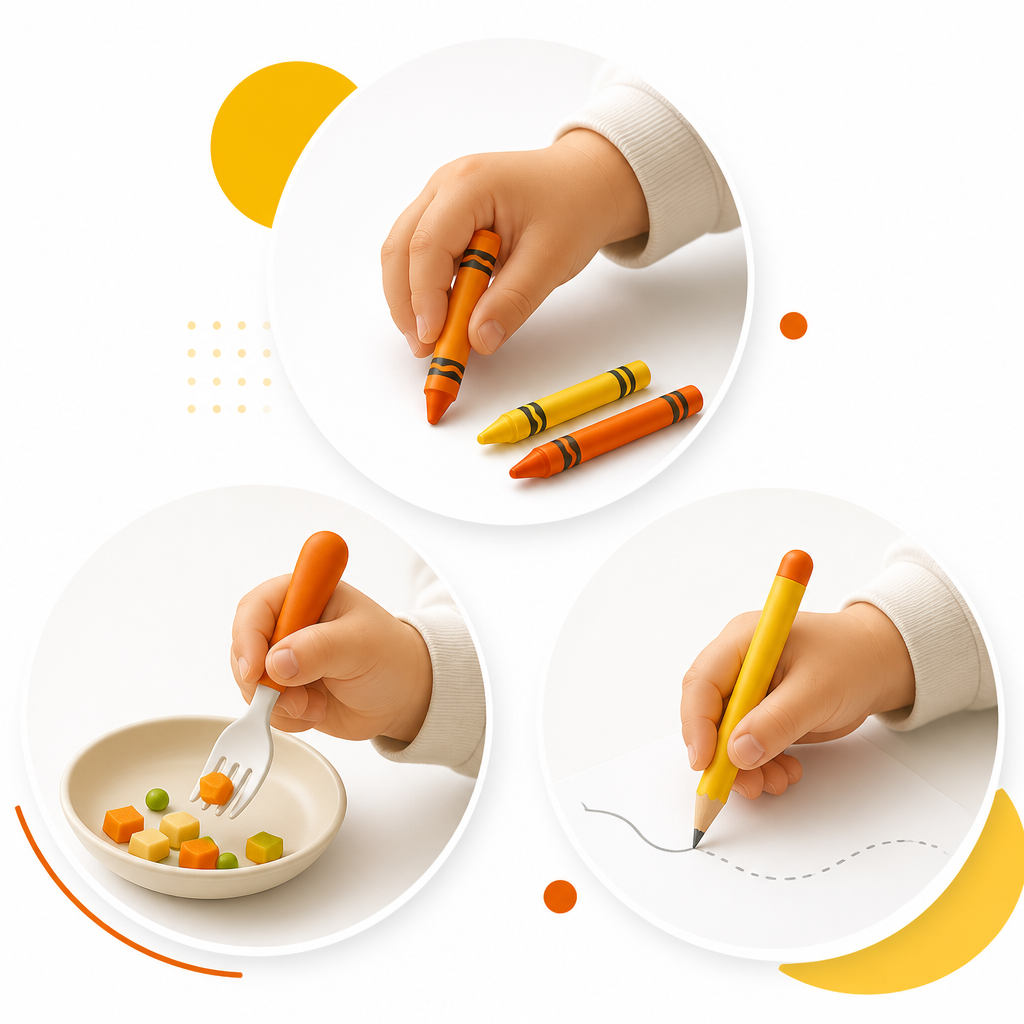
What Are Fine Motor Skills?
Fine motor skills are the abilities that use small muscle groups (hands, fingers, and wrists) and coordination between the brain and the body. These skills are needed for everyday tasks such as:
- Grasping and releasing objects
- Using utensils (fork, spoon)
- Coloring, drawing, and building with blocks
- Developing hand strength and hand control
- Writing and pre-writing skills
- Dressing independence (buttoning, zippers, snapping, tying shoes)
- Picking up small items (pencils, crayons, toys)
Fine motor skills develop through practice and support—often alongside visual-motor skills (how the eyes and hands work together).
Why Fine Motor Skills Matter for Learning and Independence
When fine motor development is delayed or inconsistent, children may experience more than “messy handwriting” or slow dressing. Potential impacts can include:
Struggling in school tasks (copying from the board, coloring, cutting)
Avoiding writing due to effort or frustration
Difficulty using tools (scissors, crayons, utensils)
Lower confidence because tasks take longer than peers
Increased fatigue during homework or classroom activities
Early support can reduce stress for both kids and parents.
Fine Motor Skill Milestones (What’s Typical by Age)
Milestones vary—some children may reach skills earlier or later. But these ranges can help you understand what’s often developing over time.
Tip: If your child’s skills are significantly behind their age group or skills suddenly changed, it’s worth discussing with your pediatrician.
Ages 0–12 Months (Foundations)
- Reaches for and grasps objects
- Transfers objects hand-to-hand
- Begins to hold small items (like toys or food)
Ages 1–2 Years (Growing Control)
- Grasps with more precision
- Uses hands together (picking up, bringing to mouth, simple play)
- May begin to use a spoon with support
Ages 2–3 Years (More Purposeful Hand Use)
- More controlled grasp (often moving toward thumb-and-finger use)
- Builds with blocks
- Draws simple marks (scribbles and intentional attempts)
- Begins dressing skills (pulling off/putting on simple clothing)
Ages 3–4 Years (Pre-Writing and Dressing Independence)
- Uses utensils with improving control
- Copies simple shapes (circles, lines, basic forms)
- Colors with more direction
- May manage buttons with assistance; practices zippers/snaps
Ages 4–5 Years (Writing Readiness)
- Holds a crayon/marker with better control
- Cuts with increasing accuracy (with supervision)
- Draws more recognizable shapes
- Begins to form letters or pre-writing patterns (varies widely by readiness)
Ages 6–9 Years (Writing Speed, Accuracy, Endurance)
- Improves handwriting legibility
- Copies and writes longer assignments
- Handles school tools (pencils, scissors) with less frustration
- Often manages more dressing independence (varies by child)
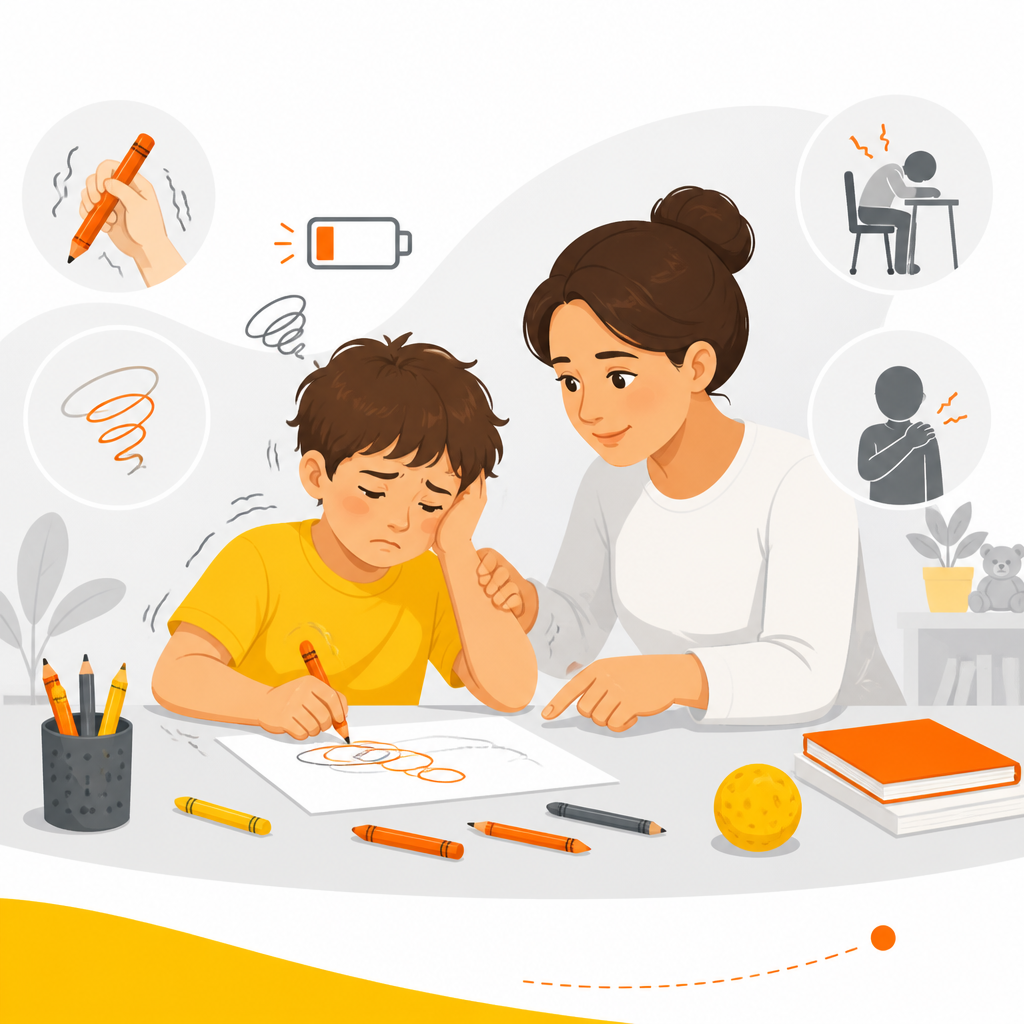
Signs Your Child May Have a Fine Motor Skill Delay
Consider reaching out if you notice multiple of the following, especially if they persist over time:
Hand and Finger Skills
- Difficulty grasping small objects (crayons, utensils, toys)
- Weak or awkward hand position
- Frequently dropping items
- Avoiding activities that require finger control
Daily Living Skills
- Trouble using utensils consistently
- Difficulty with buttoning clothes, zippers, snaps
- Struggles to tie shoes (often later in many children, but persistent difficulty may suggest support needs)
- Dressing takes much longer than expected
Drawing, Coloring, and Tool Use
- Coloring is hard to control or looks extremely uneven for age
- Strong resistance to drawing/marker/crayon use
- Trouble holding scissors or using them safely and effectively
- Needs frequent breaks due to hand fatigue
School-Related Skills (Older Kids)
- Very slow writing or copying
- Frequent frustration or tears during handwriting tasks
- Handwriting that is difficult to read (beyond “messy”)
- Complaints of pain, cramping, or excessive effort
Fine Motor Skill Delays vs. Dysgraphia: What’s the Difference?
Many parents first notice handwriting challenges—and sometimes that points to dysgraphia.
Fine Motor Skill Delay
Often involves difficulty with the physical/coordination components, such as:
- grip strength and finger control
- hand endurance
- visual-motor coordination
- forming letters with appropriate motor planning for handwriting readiness
Dysgraphia (Specific Writing Difficulties)
Dysgraphia is typically linked to challenges with writing output, including:
- organizing thoughts into written form (sometimes)
- letter formation, spacing, and consistency
- spelling-to-writing or writing speed/legibility
- handwriting that doesn’t improve much even with repeated practice
Important: A child can have fine motor challenges alone, dysgraphia alone, or both. That’s why evaluation matters.
When to Talk to Your Pediatrician (Timing Matters)
You don’t need to “wait until it’s a big problem.” Consider discussing fine motor concerns if:
- Your child is consistently behind multiple fine-motor milestones
- They avoid tasks like coloring, writing, or using utensils
- Dressing skills (buttons/shoes) remain very challenging beyond typical expectations
- School performance shows increased difficulty or frustration
- You notice a change in skills you used to see (regression)
- Handwriting issues are affecting participation, confidence, or comfort
At Powers Pediatrics, we’ll listen, take developmental history seriously, and help you determine whether your child needs monitoring, additional screening, and/or referral.
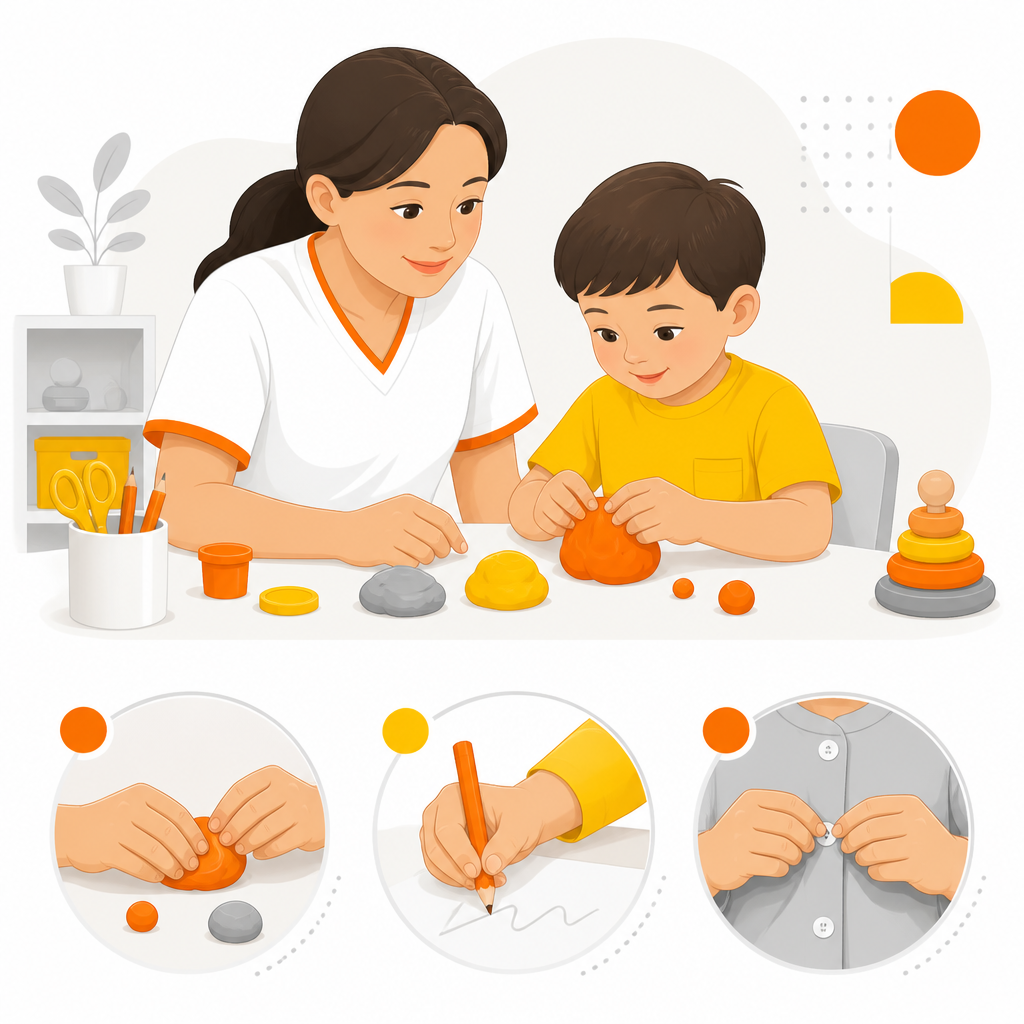
How Occupational Therapy Helps Fine Motor Skills
Occupational Therapy supports children in building practical skills needed for daily life and school. Depending on your child’s needs, OT may focus on:
- Hand strength and coordination
- Grip and grasp development (including efficient pencil/crayon control)
- Fine motor and visual-motor integration
- Handwriting readiness skills (letter formation practice the right way, not just “more writing”)
- Functional dressing strategies (buttoning, zippers, shoe-tying approaches)
- Sensory and motor planning supports if touch, textures, or movement challenges are involved
- Tools and strategies to reduce strain and increase success
OT is often more effective when it’s individualized to your child’s specific strengths and areas of challenge.
What to Expect with Developmental Guidance at Powers Pediatrics
Powers Pediatrics provides family-centered pediatric primary care with developmental milestone guidance for children from infancy through young adulthood. If you’re concerned about fine motor skills, we can help you take next steps such as:
- Listening to your concerns and reviewing developmental history
- Screening and developmental observations during visits
- Discussing school/behavior impacts (if applicable)
- Recommending next steps, which may include:
- at-home strategies and guidance
- monitoring over time
- referrals for additional evaluation (including OT when appropriate)
Our goal: help you feel supported, informed, and confident about what to do next.
Practical Steps You Can Start at Home (While You Arrange Help)
While you’re seeking evaluation, these “low-pressure” activities can help build fine motor practice:
- Playdough and squeezing tools to support hand strength
- Big-to-small grips: use thicker crayons first, then gradually reduce thickness
- Sticker activities (peel-and-place) for controlled finger movements
- Building toys (blocks, stacking, threading) to practice precision
- Fine-motor dressing practice (buttons, loops, or adapted fasteners)
- Short, consistent sessions (2–5 minutes) instead of long practice bursts
- Focus on effort and participation, not just perfect results
If a task consistently causes pain, significant distress, or refusal, that’s a strong signal to seek professional support.
Frequently Asked Questions
1) What are fine motor skills?
Fine motor skills are the hand/finger abilities needed for small tasks like grasping objects, writing, drawing, and dressing.
2) Can fine motor delays affect writing?
Yes. Weak hand control, grip issues, visual-motor challenges, and limited endurance can make writing harder and more tiring.
3) Is dysgraphia the same as poor handwriting?
Not exactly. Dysgraphia is a specific difficulty with writing and often includes challenges beyond “neatness,” such as consistency, speed, or letter formation.
4) Does occupational therapy help with handwriting?
Often, yes. OT can address the underlying motor and coordination skills that support handwriting readiness and functional writing.
5) When should I worry and call my pediatrician?
If your child is consistently behind multiple milestones, avoids fine-motor activities, shows significant frustration, or you see a change over time.
Next Step: Get Developmental Support from Powers Pediatrics
If you’re in Orlando, FL and your child is struggling with fine motor skills—grasping, utensils, drawing, handwriting, buttoning, or shoe-tying—Powers Pediatrics can help you identify concerns and plan next steps.
Schedule a developmental-focused visit to discuss your child’s milestone progress and concerns. If needed, we’ll guide you toward the right screenings and referrals, including support like occupational therapy.
Call Powers Pediatrics or request an appointment online today.