

Emotional Dysregulation & Self-Regulation Skills
If your child struggles with frustration, transitions, anxiety, mood changes, or frequent meltdowns, it can feel confusing and exhausting—especially when you’ve already tried “everything.”
Here’s the good news: every child develops at their own pace—but early guidance matters. With the right support, many kids learn to calm down more quickly, communicate needs better, and use age-appropriate coping skills.
At Powers Pediatrics in Orlando, FL, we provide family-centered pediatric primary care and developmental guidance for children from newborns through young adults.
Quick Answer: What You Can Do Today
If you’re wondering “What Is Emotional Dysregulation?” and “How do we teach self-regulation skills?” start with three practical steps:
- Co-regulate first (stay calm, reduce demands, help your child feel safe)
- Teach skills during calm moments (not in the middle of a meltdown)
- Track patterns (triggers, transitions, sleep, sensory overload) so you can prevent the next blow-up
Then, if intensity or frequency is getting in the way of home, school, friendships, or safety, it’s a great time to talk with your pediatrician.
Table of Contents
- What Is Emotional Dysregulation?
- Signs Parents Notice (Frustration, Transitions, Anxiety, Mood Changes)
- Dev Rev: Where Emotional Regulation Fits in Development
- Age-by-Age Expectations + Red Flags
- How do we teach self-regulation skills? (A Parent-Friendly Plan)
- What to Say in the Moment (Simple Scripts)
- When to Talk to a Pediatrician
- What to Expect at Powers Pediatrics
- FAQs
What Is Emotional Dysregulation?
Emotional dysregulation is when a child has difficulty managing and responding to emotional experiences in a way that matches the situation. Instead of emotions settling with time and support, the response may escalate—sometimes quickly and sometimes for a long time.
It can look like:
- Meltdowns that feel “bigger than the problem”
- Trouble recovering after a setback
- Frequent shutdowns or panic-like reactions
- Intense anger, crying, or fear that’s hard to interrupt
- Difficulty with transitions, changes in plans, or demands
Importantly: big feelings don’t automatically mean a problem. Many children struggle at times. Emotional dysregulation becomes a concern when it’s recurrent, intense, and disruptive—or when it lasts beyond what’s typical for age.

Signs Parents Notice
Parents often describe these concerns in everyday terms:
Frustration that escalates fast
- “He can’t handle ‘I can’t’ or ‘not yet.’”
- “She melts down when things don’t go as expected.”
Transitions are especially hard
- Leaving the park, bedtime, school mornings, switching activities
- Protests that start early and intensify as you approach the transition
Anxiety or “fight-or-flight” feelings
- Worry that triggers physical symptoms (stomachaches, tears, anger)
- Fear of mistakes, unfamiliar people, or uncertain plans
Mood changes that seem unpredictable
- Mood can shift quickly from calm to upset
- Takes a long time to return to baseline
Meltdowns or behavior that affects daily life
- Home routines fall apart
- School reports daily challenges
- Social relationships get strained
- Safety concerns (bolting, hitting, throwing)
If any of these are frequent, Powers Pediatrics can help you sort through what’s typical, what’s a skill-building opportunity, and what may need additional evaluation.
Dev Rev: Emotional Regulation as Part of Developmental Health
When we say Dev Rev, we mean a structured developmental review—looking at the whole child and patterns over time, not just one behavior.
Emotional regulation often connects with:
- communication (can they express needs and emotions effectively?)
- sensory processing (noise, lights, clothing, hunger, fatigue)
- language and understanding (following directions, interpreting expectations)
- attention and flexibility (shifting tasks, tolerating “no”)
- anxiety and stress responses
- sleep and daily routines
- other developmental factors that affect how a child responds under pressure
Every child is different. A Dev Rev approach helps families get clearer, earlier guidance—before frustration turns into long-term stress.
Age-by-Age Expectations (and Red Flags)
Children don’t all develop the same way, but there are patterns clinicians look for.
Toddlers (around 1–3)
Typical: tantrums, difficulty with limits, short recovery time
Red flags: extremely frequent episodes, long recovery (often 30+ minutes), aggression/safety issues, or persistent intense distress with routine changes.
Preschool (around 3–5)
Typical: emotional bursts during transitions, learning coping skills
Red flags: meltdowns still happen daily with major disruption, difficulty using basic calming strategies even with coaching, or strong distress with school/daycare.
Early Elementary (around 6–8)
Typical: improving impulse control, more verbal problem-solving
Red flags: ongoing “blow-ups” that interfere with school performance, frequent avoidance due to anxiety, or inability to explain feelings and choose strategies.
Tweens/Teens
Typical: stronger emotions, but growing capacity to self-soothe
Red flags: frequent panic-level reactions, rapid escalations tied to stress, significant conflict at home, school refusal, or emotional outbursts that feel uncontrollable.
General rule: When a child’s reactions are too intense, too frequent, and too hard to recover from, it’s time to get support.
How do we teach self-regulation skills? (A Parent-Friendly Plan)
Self-regulation isn’t “being good.” It’s a skill—built through practice, structure, and support.
A helpful framework is: Before → During → After.
1) BEFORE: Prevent the meltdown with fewer surprises
You can reduce dysregulation by lowering “surprise load.”
- Transition warnings: “In 5 minutes… then we go.”
- Use consistent routines (visual schedules help many kids).
- Offer limited choices: “Do you want to walk or take the stroller?”
- Predict the plan (especially for anxiety-prone kids).
Pro tip: If your child struggles with transitions, practice transitions when they’re calm (role-play with toy cars, timers, and rehearsed steps).
2) DURING: Co-regulate first (your calm teaches their brain)
In the moment, your child may not be able to access “logic.” Your goal is safety and recovery.
What helps:
- Lower your voice and slow your pace
- Get close but not crowd them
- Use short sentences
- Reduce demands (“I’m here. You’re safe. We’ll reset.”)
Avoid power struggles: Debates and long explanations usually increase escalation.
3) AFTER: Teach the skill while the nervous system cools down
This is when learning sticks.
Use a brief, judgment-free recap:
- “That was really hard.”
- “Next time we can try your coping tool.”
Then practice one strategy at a time:
- emotion words (“mad,” “worried,” “frustrated”)
- coping tools (“break,” “deep breaths,” “squeeze a stress ball,” “calm corner”)
- problem-solving (“What could we do instead next time?”)
Keep it short—many families overteach after an episode. The best lessons are simple and repeatable.
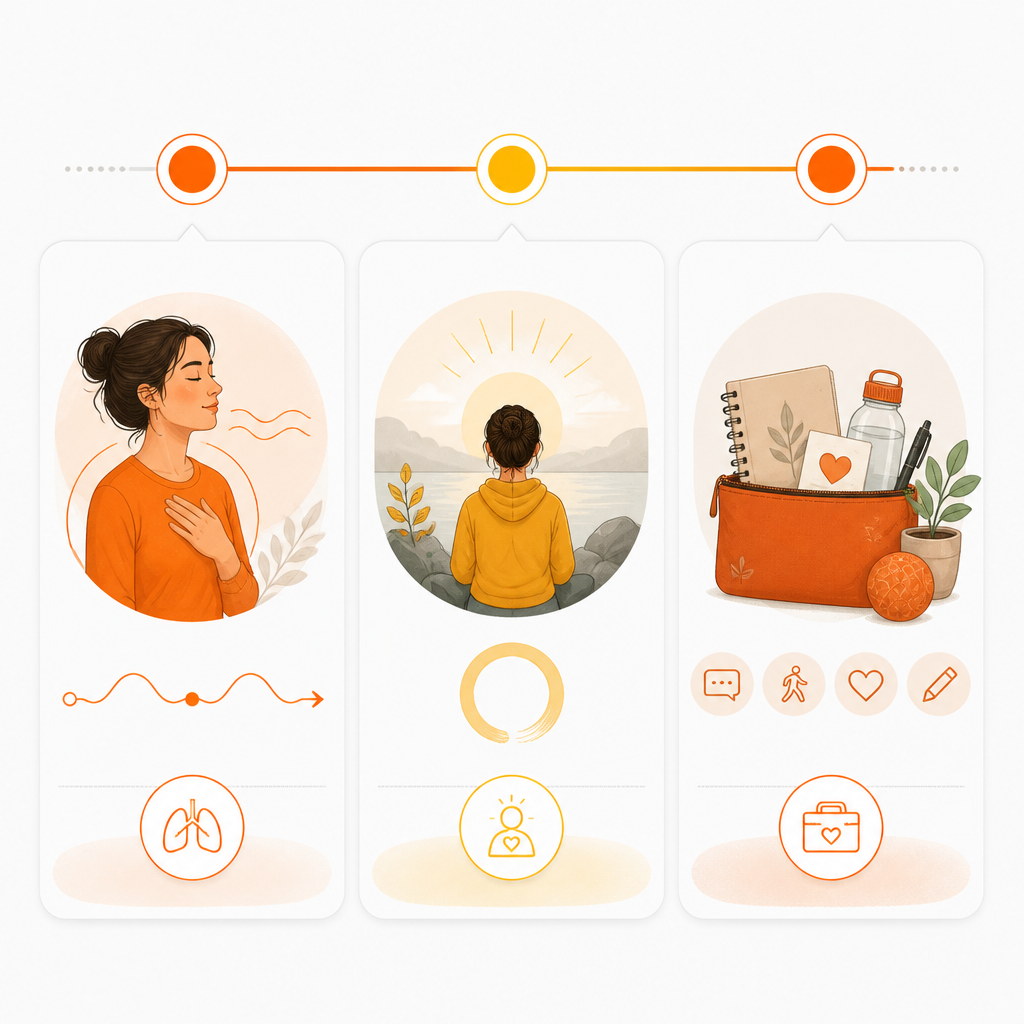
The Core Skills That Build Self-Regulation
Here are evidence-aligned, practical skills parents can coach.
1) Emotion labeling (inside-and-out)
Kids do better when they can name what they feel.
- “Your body looks like it’s feeling worried.”
- “That sounds like frustration, not ‘bad behavior.’”
2) Coping tools (sensory + regulation)
Some kids need physical regulation before they can think.
Examples:
- movement breaks (jumping jacks, wall push-ups)
- sensory input (fidget tools, weighted items if appropriate)
- breathing games (smell the pizza, blow the candle)
- calm corner with predictable options
3) Flexible thinking practice
Many meltdowns are about “I can’t” or “it’s not the plan.” Teach:
- “Not yet” language
- mistake-friendly phrases (“Let’s try again together.”)
- brief rehearsals for “plan changes”
4) Communication over escalation
When kids can express needs, behavior often improves.
- “I need a break.”
- “I don’t like this. Can I have help?”
- “I’m overwhelmed—can we slow down?”
5) Reinforce the skill, not just the outcome
Notice the effort:
- “You used your break spot!”
- “You told me you were upset.”
Positive reinforcement helps self-regulation become the default strategy.
What to Say in the Moment (Simple Scripts)
When emotions spike, families often need ready-to-use language.
During a meltdown:
- “I see you. You’re safe.”
- “We’re going to take a break.”
- “I’ll help you calm down. Then we’ll try again.”
When calm returns:
- “What happened right before it got big?”
- “What feeling was strongest?”
- “Which tool do you want to try next time?”
Keep scripts consistent—kids learn through repetition.

When to Talk to a Pediatrician
Reach out if emotional dysregulation is:
- frequent (for example, weekly or more, depending on age)
- intense (hard to interrupt, long recovery, aggression or safety concerns)
- impairing (school refusal, lost friendships, family stress)
- new or worsening (a noticeable change from your child’s baseline)
- paired with concerns in other areas (speech, learning, social skills, developmental milestones)
A pediatric visit doesn’t mean a diagnosis is guaranteed—it means you’re getting clear next steps for your child and your family.
What to Expect at Powers Pediatrics
At Powers Pediatrics, our goal is to help parents feel supported and confident.
During your visit, we may provide:
- developmental milestone guidance tailored to your child’s age
- a Dev Rev-style developmental review of patterns and triggers
- guidance on coping skills and family routines
- screenings when appropriate
- referrals to other services (when needed), such as developmental-behavioral supports, therapy, or evaluations
We also offer:
- same-day appointments and walk-ins
- telemedicine options when it’s easier for your family
- help using the patient portal
- support for common health factors that can worsen regulation (sleep, illness, allergies, etc.)
Get Support Today (Call to Action)
If you’re worried your child may not be meeting expectations in emotional regulation—or you’re seeing meaningful changes in behavior, anxiety, or meltdowns—Powers Pediatrics is here.
Schedule a developmental-focused visit in Orlando, FL through:
- online appointment requests
- same-day appointments or walk-ins
- patient portal follow-up
Early guidance can make a real difference.
Frequently Asked Questions
? How do we teach self-regulation skills if my child only learns when calm?
? Is emotional dysregulation the same as “bad behavior”?
? What Is Emotional Dysregulation in children, specifically?
? When should we consider evaluation or additional support?
Closing Reassurance
You’re doing the right thing by seeking help. Emotional regulation skills are teachable, but they often require the right strategy at the right time—and sometimes additional developmental guidance.
With family-centered pediatric care, you don’t have to guess. Powers Pediatrics can help you understand what’s happening and create a realistic plan for your child and your family.