Powers Pediatrics • Infants & Toddlers

Developmental Guidance for Infants & Toddlers

From the first smile to first steps (and every question in between), parenting can feel like a constant mix of wonder and “Am I doing this right?”

At Powers Pediatrics, we help families in Orlando, FL understand their child’s growth, developmental milestones, behavior, learning, and age-appropriate health needs—especially during the infants & toddlers stage when guidance matters most for early learning and child well-being.

Whether you’re noticing a change in behavior, questions about speech, sleep, picky eating, or you just want a clearer plan for what’s next—our team is here to support you with family-centered pediatric primary care.

Same-day visits, walk-ins, and telemedicine available. Medicaid and most major insurance accepted.

Book appointment Developmental guidance you can use immediately.

What Parents Typically Need From Developmental Guidance

If you’re seeking answers, you’re not alone. Many families want help with:

  • Milestones: What’s typical at each age—and what’s worth discussing
  • Behavior & temperament: Big feelings, frustration, boundaries, separation anxiety
  • Learning & communication: speech progress, gestures, play skills
  • Health and daily routines: sleep, feeding, growth concerns, common illness patterns
  • “Is it normal?” moments: regressions, sudden changes, or delays you can’t ignore
  • Next steps: screenings, referrals when needed, and practical at-home support

This pillar page gives you a clear starting point—and explains how Powers Pediatrics helps you turn concerns into confident care.

Illustration of family-centered early learning representing social-emotional growth, language, cognition, motor skills, and physical health.

Early Learning & Child Well-Being: What “Development” Really Means

Development isn’t just one skill. It’s a connected system including:

  • Social-emotional growth (how your child connects, calms, and communicates)
  • Language development (sounds, words, back-and-forth interaction)
  • Cognitive growth (problem-solving, curiosity, learning through play)
  • Motor skills (tummy time, crawling, walking, fine motor coordination)
  • Physical health (growth, nutrition, sleep, hearing/vision, recovery from illness)

When families understand these areas together, it becomes easier to spot patterns and seek support early—when it can make the biggest difference.

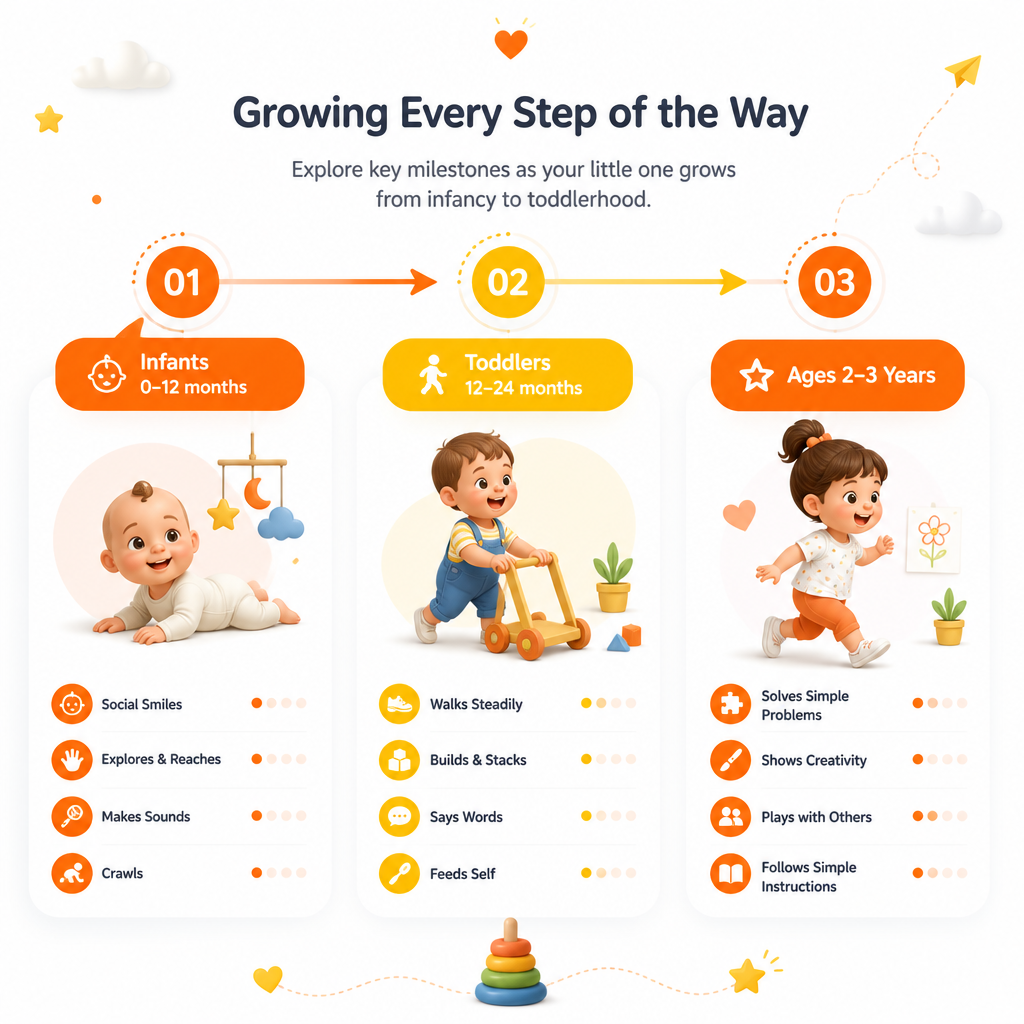
Developmental Milestones by Stage (A Helpful Overview)

Every child develops on their own timeline, but well-child visits help track progress and catch concerns early.

Infants (0–12 months): Building Foundation

  • Responding to sounds, eye contact, smiling, and shared attention
  • Rolling, sitting, crawling, and pulling to stand
  • Early communication: cooing, babbling, gestures

What matters for early learning: daily interaction—talking, reading, singing, responsive play.

Toddlers (12–24 months): More Words, More Movement, More Independence

  • Increased mobility and coordination
  • Growing vocabulary and imitation skills
  • Following simple directions (with repetition)
  • Temper tantrums and strong preferences (often a sign of healthy development—not “bad behavior”)

What matters for child well-being: routines, consistent responses, and supportive communication.

Ages 2–3 Years (Preschool Readiness)

  • Clearer speech and more complex sentences
  • Pretend play and taking turns
  • Improving self-help skills (dressing, feeding, toileting progress)
Illustration of developmental milestones by stage with a clean three-step timeline for infants and toddlers.

When to Check In With Your Pediatrician (Red Flags & “Worth Discussing” Signs)

You don’t need to wait for a “diagnosis” to ask questions. Contact our team if you notice patterns like:

  • Loss of skills (regression in speech, social engagement, or movement)
  • Limited eye contact or reduced social interaction compared to before
  • Not responding to name or sounds consistently
  • Major feeding or growth concerns (significant weight changes, persistent swallowing difficulties)
  • Frequent ear infections or concern for hearing
  • No meaningful speech or gestures by expected ages
  • Difficulty with everyday functioning (sleep, feeding, calming, daily participation) that feels unusually hard

At Powers Pediatrics, we’ll help you sort what’s typical, what should be screened, and what next steps make sense.

Illustration depicting family-centered pediatric support during well visits, including guidance, screenings, and telemedicine cues.

How Powers Pediatrics Supports Development (What Happens at Well Visits)

Developmental guidance isn’t a one-time conversation—it’s built into pediatric care.

When you bring your child to Powers Pediatrics, we can help with:

  • Preventive care & well-child visits that track growth and developmental progress
  • Developmental milestone discussions tailored to your child’s age and your observations
  • Behavior and learning guidance you can use at home immediately
  • Health screenings that impact development, including nutrition, sleep patterns, and growth trends
  • Immunizations and everyday health protection that support consistent development
  • Allergy and cold/flu testing when symptoms affect sleep, breathing, feeding, or comfort
  • Telemedicine options for guidance and follow-up when appropriate

If concerns need additional evaluation, we’ll also help you understand the next step—including referrals to appropriate specialists when warranted.

Family Engagement That Builds Early Learning (Simple, Real-Life Ideas)

Parents don’t need a “perfect” routine. They need supportive interaction that fits real life. Try these evidence-informed engagement habits:

1

Talk, narrate, and label throughout the day

  • “Now we’re washing hands.”
  • “You found the red ball!”
  • “Let’s put the block on top.”
2

Read together—even short books

  • Point to pictures
  • Ask simple questions (“Where is the cat?”)
  • Let your child “turn the page” when possible
3

Make play a two-way conversation

  • Roll a ball back and forth
  • Build a tower and knock it down
  • Pretend play with cups, cars, or stuffed animals
4

Use routines to reduce big emotions

  • Predictable transitions (diaper → song → book)
  • Consistent calming strategies you can repeat
5

Follow your child’s lead

If your child is focused on wheels, cars, or stacking, that’s learning—expand gently, don’t force.

Convenience That Helps You Follow Through

We know parents often delay care because of scheduling stress. Powers Pediatrics helps reduce that friction.

Choose what works

  • Same-day appointments when possible
  • Walk-ins available
  • Online appointment requests

Guidance that fits

  • Telemedicine for convenient follow-up and guidance
  • Patient portal access to stay on track
  • Accepts Medicaid and most major insurance

Frequently Asked Questions

1) “How do I know if my child’s development is on track?”

The most accurate answer comes from regular well-child care plus your observations. During visits, we track milestones, ask targeted questions, and discuss what you’re seeing at home.

2) “My toddler isn’t talking much—should I worry?”

It’s worth discussing. We’ll review communication patterns (gestures, sound use, understanding), consider hearing and health factors, and suggest next steps if screening is needed.

3) “Is it normal for behavior to get worse around age 2?”

Often, yes. Toddlers gain independence and communication skills—while still struggling with impulse control and emotional regulation. Guidance can help you respond in ways that support learning and calm.

4) “Can allergies or frequent colds affect development?”

They can. Ongoing congestion, sleep disruption, and discomfort can impact feeding, attention, and behavior. If symptoms suggest it, we can help with evaluation, including allergy testing and cold/flu testing when appropriate.

5) “Do you offer developmental guidance via telemedicine?”

We can often help with follow-up and guidance through telemedicine, depending on your child’s needs. If an in-person evaluation is the best next step, we’ll recommend it.

Ready for Family-Centered Pediatric Care in Orlando?

If you’re looking for developmental guidance that feels practical, supportive, and trustworthy—Powers Pediatrics is here for you.

Book your visit for:

  • Developmental milestone discussions for infants & toddlers
  • Preventive care and wellness visits
  • Sick visits for everyday childhood concerns
  • Immunizations
  • Allergy testing and cold/flu testing when needed
  • In-person care or telemedicine support

Compassionate pediatric care in Orlando for every stage of childhood—newborn through young adults. Same-day options, walk-ins, Medicaid, and most major insurance accepted.

Next Step: Schedule With Powers Pediatrics

Take the stress out of “what should we do next?” and get clear, family-centered guidance.

  • Request an appointment online
  • Call to schedule
  • Choose telemedicine when appropriate

Powers Pediatrics—supporting early learning and child well-being, one visit at a time.