

Adolescent HPV Vaccination & Routine Childhood Immunizations
When you’re preparing for middle school or high school, vaccine conversations can feel like a lot—especially for families of preteens and teens. This guide helps you understand HPV vaccination and how it fits into the broader routine plan of childhood immunizations that protect children at every age and stage.
At Powers Pediatrics in Orlando, FL, we provide family-centered pediatric care to help you feel confident staying on track with recommended immunizations—so your child can be healthy, prepared for school activities, and protected against serious preventable diseases.
What Are Childhood Immunizations—and Why Do They Matter for Teens?
Childhood immunizations are vaccines given from infancy through the teen years to protect against diseases that can cause severe illness, long-term complications, and (in some cases) cancer or disability.
Even if a disease isn’t common in your community, vaccines help reduce the risk of outbreaks and protect individuals who could become very ill if exposed.
For teens, vaccines are especially important because:
- They may have more social contact (school, sports, events)
- Some infections spread through close skin-to-skin or other routes
- Protection needs may change as children grow
- School and sports participation often require up-to-date records
Where Does the HPV Vaccine Fit?
HPV (human papillomavirus) is a very common virus. Some HPV types can cause cancers later in life and other types can cause genital warts. Vaccination helps prevent HPV-related disease.
The HPV vaccine is recommended as part of the routine adolescent immunization plan. Many families choose to start during the preteen years so protection can be established before exposure risks increase.

Key patient education point: The HPV vaccine is designed to help prevent HPV infections and the conditions that HPV can lead to—not to treat an infection after it happens.
Who Should Get the HPV Vaccine?
In general, the HPV vaccine is recommended for preteens and teens as part of routine care. Whether your child needs 2 doses or 3 doses can depend on age at the start of the vaccine series and your clinician’s guidance.
If you’re unsure whether your teen is already up to date, bring their immunization record to your next visit. We’ll review what’s needed and help you plan the safest, most convenient schedule.
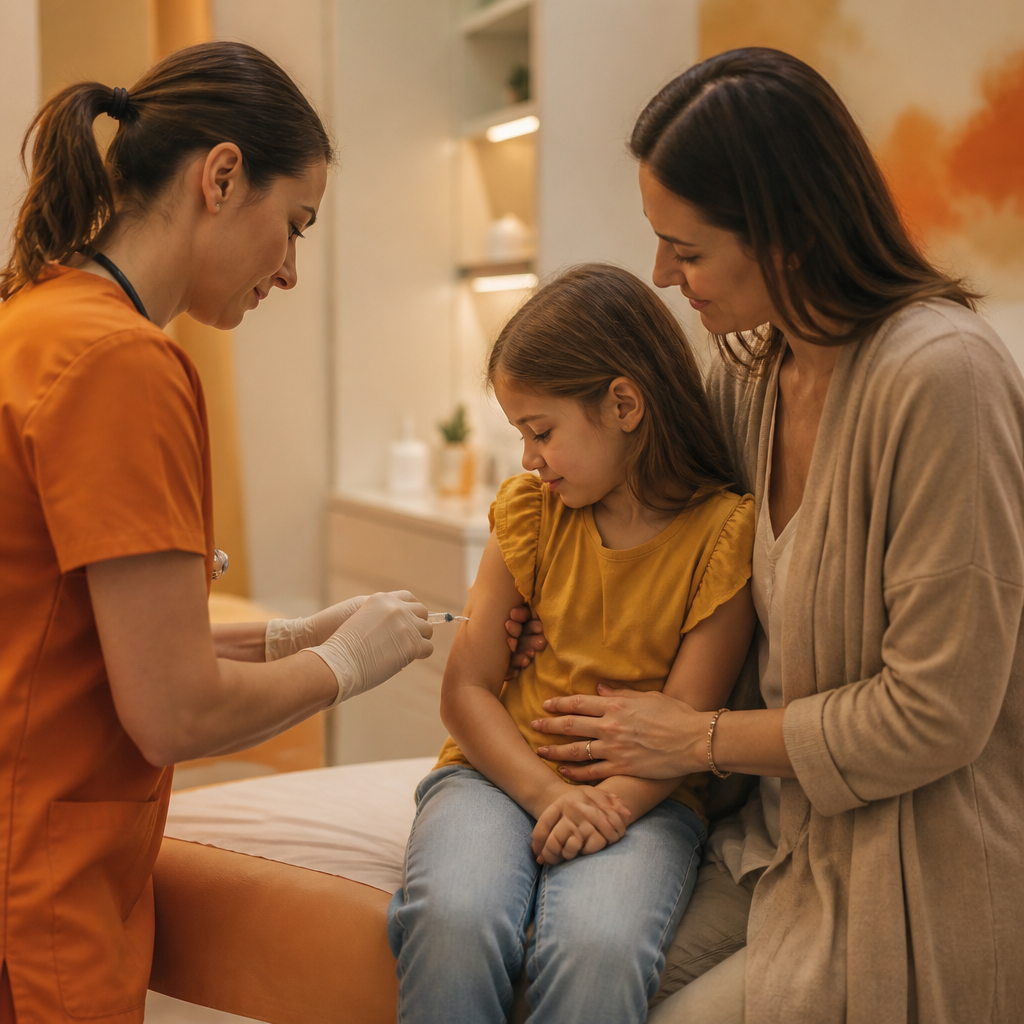
What to Expect When Your Child Gets the HPV Vaccine
Most vaccine visits are quick and focused on safety and comfort. Here’s what families commonly experience:
- During the visit: Your team will confirm identity and vaccine history, review any questions, and answer concerns.
- After the shot: Your child may have mild side effects such as soreness at the injection site, mild fever, headache, or tiredness.
- Ongoing: Any temporary discomfort usually resolves within a short time. We’ll help you know what’s normal and what would warrant a call.
Patient education matters: We’ll talk through common questions—like “Is it okay to get HPV vaccine with other adolescent vaccines?” and “What if my child is anxious about shots?”
How HPV Vaccination Works With the Rest of the Adolescent Schedule
HPV vaccination is one piece of comprehensive preventive care. Depending on your child’s age and prior immunizations, they may also need other routine adolescent vaccines.
Common vaccine categories that may be part of adolescent and teen schedules include (based on age and history):
- Tetanus/diphtheria/pertussis (Tdap)
- Meningococcal vaccines
- Seasonal flu vaccine
- Other age-appropriate vaccines to complete earlier series
Your child’s schedule is individualized, so we focus on building a plan that keeps them protected and on track with recommended childhood immunizations.
Common Parent Questions About HPV Vaccination
“Why is HPV vaccine recommended at the preteen age?”
Starting early helps establish protection before exposure risk increases. It’s also aligned with routine preventive pediatric care.
“Is the HPV vaccine safe?”
HPV vaccination recommendations come from ongoing evaluation of clinical evidence and vaccine safety monitoring. Your pediatric team can help you review your child’s health history and address concerns.
“Should my child get other vaccines during the same visit?”
In many cases, vaccines can be administered as part of routine preventive care. Your clinician will confirm what’s appropriate based on age, vaccine history, and any medical considerations.
“What if my teen missed earlier vaccines?”
It’s still possible to catch up. We can review records and build a plan to get your child protected without unnecessary delays.
How Powers Pediatrics Helps Families Stay On Track
At Powers Pediatrics, we aim to make vaccine visits easier for both parents and children. Our approach is family-centered pediatric primary care, meaning we:
- Review vaccine records and help you understand what’s due
- Provide patient education in a clear, respectful way
- Support families who want to discuss concerns, side effects, and scheduling
- Offer convenient visit options for children from newborns through young adults

We also serve families in Orlando with routine immunizations and preventive care, including convenient appointment availability and support through our patient portal.
Vaccine Guidance From Trusted Sources (Google Scholar / Research)
Families who want to read more can start with reputable medical guidance and peer-reviewed evidence. For background on HPV vaccination recommendations and clinical guidance, you may explore resources such as:
- ACOG (American College of Obstetricians and Gynecologists) clinical guidance on HPV vaccination
https://www.acog.org/clinical/clinical-guidance/committee-opinion/articles/2020/08/human-papillomavirus-vaccination - American Academy of Pediatrics (AAP) patient-care guidance on how HPV vaccine is recommended
https://www.aap.org/en/patient-care/immunizations/human-papillomavirus-vaccines/how-to-recommend-hpv-vaccination/ - Peer-reviewed research available through PubMed Central (PMCID articles)
https://pmc.ncbi.nlm.nih.gov/articles/PMC10305488/
If you use Google Scholar, searching terms like “HPV vaccination recommendations adolescents” and “safety effectiveness HPV vaccine” can help you locate additional peer-reviewed studies.
FAQ: Adolescent HPV Vaccination & Routine Childhood Immunizations
1) Is HPV vaccination part of childhood immunizations?
Yes. HPV vaccination is recommended during adolescence and is part of the broader routine immunization plan for children and teens.
2) How do I know if my teen is up to date?
Bring your teen’s immunization record to a visit. Your pediatric team can compare it to the recommended schedule and identify what’s needed next.
3) What side effects are normal after the HPV shot?
Common mild effects can include soreness at the injection site, mild fever, fatigue, or headache. We can explain what to expect and when to contact the office.
4) Can my child receive the HPV vaccine if they’re nervous about shots?
Yes—share your concerns when you schedule. We’ll support your child during the visit and help you plan for comfort.
5) Do teens really need HPV vaccine if they’ve had other vaccines before?
Yes, because HPV vaccine protects against HPV-related disease and is recommended based on age and vaccine history—not only on whether other vaccines have been received.
Conclusion: Stay Confident With Every Age and Stage
Adolescent health planning doesn’t have to be stressful. With the right patient education and a clear plan, HPV vaccination can be an easy, reassuring part of routine preventive care. By staying on schedule with childhood immunizations, you help protect your child from serious preventable diseases and support readiness for school, sports, and everyday life.