

Motor Skill Delays in Children
If your child isn’t crawling, walking, running, jumping, climbing stairs, or balancing the way you expected—or you notice changes in coordination—you’re not alone. Many families wonder, “Is this just slower development… or something we should check now?”
Every child develops at their own pace—but early guidance matters. The earlier you ask questions, the sooner you can get the right testing & diagnosis and support to help your child build strength, coordination, and confidence.
Developmental milestone guidance
Family-centered pediatric care in Orlando, FL, including developmental milestone guidance.
Referrals when needed
Including physical therapy for gross motor skills delays.
Same-day options
Same-day appointments, walk-ins, telemedicine, and access through our patient portal.
What Are Motor Skill Delays?
Motor skill development is how children learn to move their bodies and control their movements. Delays may show up in:
- Gross motor skills: bigger movements like crawling, walking, running, jumping, climbing, balance, and coordination
- Fine motor skills (sometimes related): smaller movements like grasping, transferring objects, and hand control
A delay doesn’t automatically mean something serious. But it does mean it’s worth having your child evaluated so you can understand what’s going on and what support will help.

Common Signs of Gross Motor Skills Delays
You may want to talk with your pediatrician if you notice several of the following patterns—especially if they persist over time:
Crawling, standing, and walking
- Not crawling or getting into positions in the expected time range
- Delayed standing with support
- Walking much later than peers (or never progressing beyond “cruising”)
- Walking that looks very stiff, very floppy, or difficult to coordinate
Running, jumping, and climbing
- Difficulty with running, jumping, or landing safely
- Frequent falls that don’t improve with practice
- Trouble climbing stairs (or inability to do stairs with typical support for age)
Balance and coordination
- Poor balance when standing or walking
- Awkward movement patterns that interfere with play
- Avoiding activities like playground play, climbing, or sports
Muscle tone and movement patterns
- Significant differences in muscle tone (very tight/stiff or very floppy)
- Unusual posture or movement strategy (for example, toe-walking frequently)
Tip: If you’re unsure whether the concern is “enough” to mention, it is—your pediatrician can help sort out normal variation vs. a developmental delay.
Typical Development Milestones (What Many Parents Expect by Age)
Milestones can vary. Prematurity, differences in temperament, and learning style can affect timing. Still, these ranges can help you gauge whether your child is progressing as expected.
6–9 months
- Rolling both directions, sitting with support (often), reaching smoothly
- Increasing tummy-time tolerance and early movement patterns
9–12 months
- Transitioning between positions (sitting, crawling attempts)
- Crawling or moving around in a way that supports exploring and reaching
12–18 months
- Standing and taking steps with support, progressing toward independent walking
- Using hands to explore while walking approaches
18–24 months
- Walking more confidently
- Beginning to run, climb onto furniture, and navigate stairs with help
2–3 years
- More stable balance and coordination
- Running with improved control, jumping with both feet (often), climbing stairs better
If your child is not moving forward over time, or you see a loss of skills (regression), it’s a good reason to request developmental guidance.
Why Motor Skill Delays Happen
Gross motor skills delays can have many contributing factors. Common possibilities your pediatrician may consider include:
- Differences in muscle strength or tone (too tight or too floppy)
- Coordination challenges affecting balance and movement planning
- Early life factors (including prematurity)
- Neuromuscular or neurological conditions (only when indicated by evaluation)
- Joint or orthopedic factors
- Vision or hearing issues affecting movement and spatial awareness
- Sensory processing differences (sometimes influencing how a child engages with movement)
- Developmental conditions (when patterns show broader developmental involvement)
A personalized assessment is the best way to move from “maybe” to clarity.
Why Early Guidance Matters
- Build foundational movement skills before habits become harder to change
- Improve strength, balance, coordination, and confidence
- Reduce frustration during play and daily routines
- Provide your family with a plan for home strategies and next steps
- Support early decision-making through appropriate testing & diagnosis
When to Contact a Pediatrician (Red Flags)
Call Powers Pediatrics if you notice any of the following:
- Your child is not meeting multiple gross motor milestones for age
- Skills seem to plateau (little progress over months)
- Your child frequently falls and avoids typical movement activities
- You notice ongoing stiffness, unusual posture, or persistent toe-walking
- There is regression (losing previously gained skills)
- You suspect both motor concerns and speech, social, or learning changes
- Your child struggles enough that it’s affecting participation at daycare, preschool, or play
You don’t need to have all the answers—your pediatrician is there to help you evaluate next steps.
Testing & Diagnosis: What the Evaluation Can Look Like
At Powers Pediatrics, the goal of testing & diagnosis isn’t just to label—it’s to understand why your child is struggling and what will help most.
- Developmental history
- Pregnancy/birth history, milestones timeline, feeding/sleep concerns, family history
- Growth and physical exam
- Muscle tone, strength, reflexes (when appropriate), range of motion, posture
- Developmental screening and observation
- Monitoring how your child moves during clinic-observed play and transitions
- Targeted questions about function
- Balance, running/jumping skills, climbing, stair safety, and daily participation
- Referrals if indicated
- Physical Therapy for gross motor development
- Occupational therapy and/or developmental specialists if broader needs are suspected
- Additional testing when needed
- Depending on findings, your clinician may recommend further evaluation for medical contributors
If you’ve already received advice from a therapist or another provider, bring that information—Powers Pediatrics can coordinate next steps.

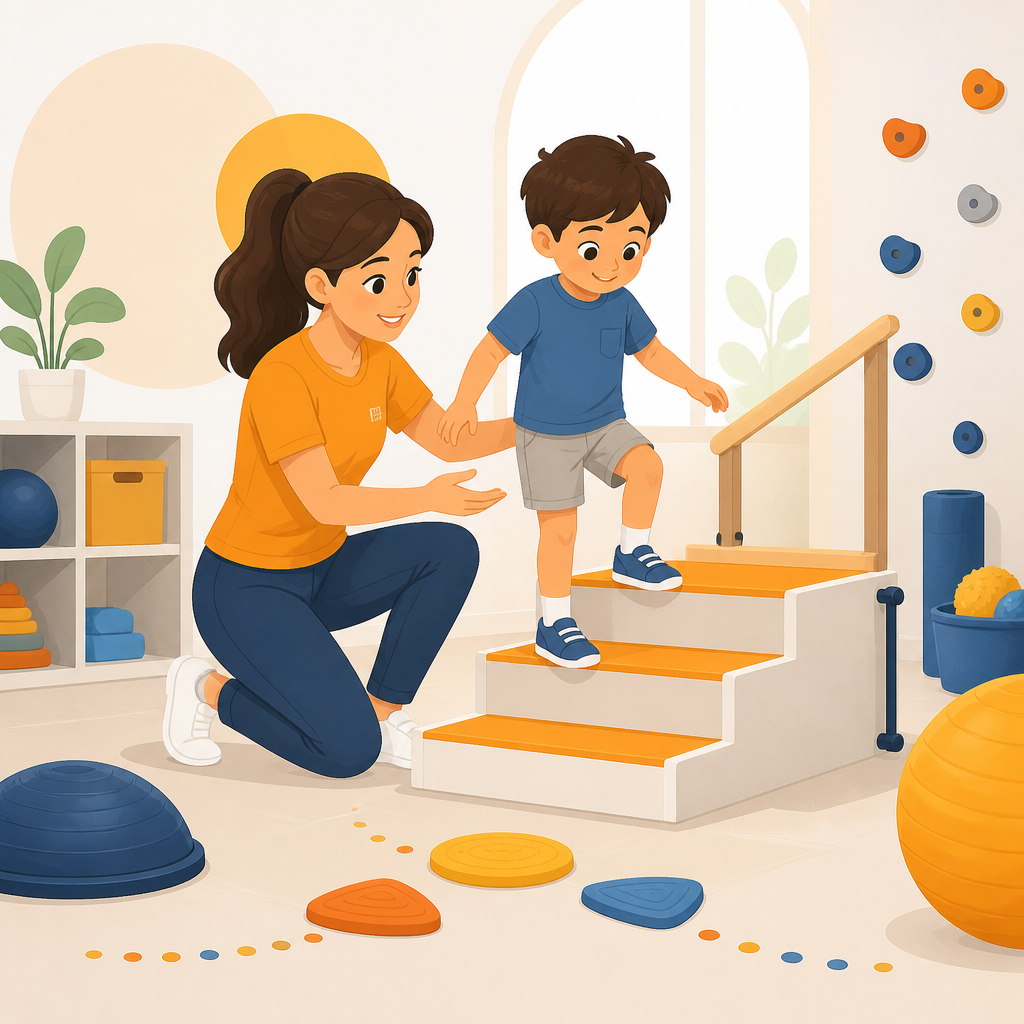
How Physical Therapy Helps Gross Motor Skills
Physical therapy can be a game-changer when a child needs support building movement skills. PT works on what’s functional in everyday life—play, walking, running, balance, climbing stairs, and safe movement.
What physical therapy often includes
- Strength and endurance training (for stability and control)
- Balance and coordination practice
- Gait training (walking/running patterns)
- Motor planning and movement sequencing
- Range of motion support (when stiffness is part of the picture)
- Play-based goals so therapy transfers naturally to home and school
What to expect
- A PT evaluation that targets your child’s specific needs
- An individualized therapy plan with goals and measurable progress
- Home exercises or strategies you can use to reinforce gains safely
How quickly will you see results?
Some families notice changes within weeks, while others see progress over a few months. What matters most is consistent, targeted support—and adjusting the plan as your child improves.
Support at Home: Safe, Simple Activities to Encourage Movement
While you pursue professional guidance, you can often support gross motor development with everyday play. A few ideas (always supervise closely and tailor to your child):
- Obstacle courses indoors: cushions for stepping, low barriers to climb over
- Stairs practice: one hand held, slow and safe repetition
- Animal walks: bear crawl, crab walk, “hop like a bunny” (only if age-appropriate)
- Ball play: throw/roll a ball to practice reaching, balance, and stance changes
- Jumping games: step-stool or foam “islands” for controlled jumping
- Tummy time and supported floor play: encourage transitions and reaching
- Limit barriers to movement: avoid overly restrictive devices that reduce floor time
If you already have a PT evaluation planned, ask what activities match your child’s current needs—small adjustments can make home support much more effective.
How Powers Pediatrics Supports Families in Orlando
Powers Pediatrics has been serving families since 2008, offering caring, comfortable, family-centered pediatric care for newborns through young adults.
When you’re concerned about developmental milestones—especially motor skills—our team can help you:
Guidance and planning
- Get developmental milestone guidance
- Discuss your child’s movement concerns in detail
- Provide ongoing follow-up as your child progresses
Testing and referrals
- Perform developmental screening and evaluations when needed
- Recommend physical therapy and other referrals when appropriate
Visit options
- We offer same-day appointments, walk-ins, telemedicine, and access through our patient portal
- We also accept Medicaid and most major insurance
Frequently Asked Questions
1 Is it normal if my child is slower to walk or run?
Some variation is normal. But if your child isn’t making progress or you notice multiple gross motor milestones delayed, it’s worth getting guidance sooner rather than later.
2 What’s the difference between fine motor and gross motor delays?
Gross motor involves whole-body movement (crawling, walking, jumping, balance). Fine motor involves smaller hand/arm control (grasping, pointing, transferring objects). They can occur together, but they’re evaluated differently.
3 Should we wait and see?
If you’re already seeing delays in crawling, walking, balance, climbing stairs, or overall coordination, waiting can slow down access to support. Early evaluation helps you create a plan.
4 Can physical therapy help even if my child seems “stubborn” or refuses activities?
Yes. PT is goal-based and play-oriented. Therapists often use motivating activities and step-by-step strategies to build skills without turning therapy into a battle.
5 What if my child lost skills they had before?
Regression is a reason to contact a pediatrician promptly for evaluation.