

Understanding ADHD in Children with Primary Care Help
It can be scary when you notice changes in your child’s learning, behavior, speech, social skills, or ability to focus. Many parents worry: “Is this just normal energy—or could it be ADHD?”
At Powers Pediatrics in Orlando, FL, we support families who are seeing signs of inattention, hyperactivity, impulsivity, disorganization, difficulty sitting still, or trouble completing tasks. Every child develops at their own pace—but early guidance matters, and primary care can be your starting point for clarity, screening, and next steps.
Getting distracted easily
Constant movement or “always on the go”
Interrupting others
Messy work areas and missed steps
Quick Reassurance for Concerned Parents
- ADHD is a common neurodevelopmental condition.
- Symptoms can show up at home, school, and during everyday routines.
- Early conversations with your pediatrician help you understand what’s going on and what support may help.
- You don’t have to navigate this alone—family-centered pediatric primary care can guide the process.
What Is ADHD? (Understanding ADHD)
Attention-Deficit/Hyperactivity Disorder (ADHD) is a neurodevelopmental disorder that affects how a child:
- pays attention and stays focused,
- regulates activity level (sitting still, restlessness),
- controls impulses (waiting, thinking before acting),
- manages organization and task completion.
According to major clinical guidance, ADHD isn’t “a character flaw.” It’s about brain-based self-regulation skills—so supportive structures and targeted evaluation are often key.
Common ADHD Symptoms You May See at Home
Many parents first notice ADHD through patterns, not one isolated moment. Common signs include:
Inattention (Struggling to Focus)
- Frequently losing items (papers, pencils, toys)
- Getting distracted easily
- Trouble following multi-step directions
- Difficulty sustaining attention during homework or reading
- Seeming not to listen during conversations
- Trouble finishing tasks
Hyperactivity (Over-Activity or Restlessness)
- Constant movement or “always on the go”
- Difficulty sitting still during meals, story time, or car rides
- Excessive fidgeting, squirming, climbing
- Restlessness that doesn’t match the situation
Impulsivity (Acting Without a Pause)
- Interrupting others
- Blurting out answers before questions finish
- Having difficulty waiting turns
- Acting quickly without thinking about consequences
- More frequent accidents or unsafe decisions
Disorganization (Difficulty Managing Tasks)
- Messy work areas and missed steps
- Trouble planning ahead
- Forgetting what to do next
- Inconsistent performance (can look “fine” at times, then struggle later)
ADHD Signs by Age: What Parents Often Observe
ADHD can look different depending on your child’s age and developmental stage.
Preschoolers (Often Early Clues)
Parents of preschoolers may notice:
- More difficulty than peers with listening to simple routines
- Frequent transitions that feel chaotic (getting from one activity to the next)
- Restlessness that makes calm play hard to maintain
- Big emotional reactions when expectations change
- Trouble with turn-taking or following directions even with reminders
*Tip:* Preschool environments are naturally active—so the goal isn’t to label behavior, but to notice persistent patterns and how much they interfere with daily life.
School-Age Children (More Visible in Learning and Structure)
- Trouble completing assignments, especially multi-step tasks
- Forgetting instructions or homework details
- Lower grades than expected
- Increased complaints from teachers
- Increased frustration, defiance, or avoidance around schoolwork
- “Smart but inconsistent” performance
Tweens & Teens (Symptoms Can Change Form)
- Struggles with organization (deadlines, planning, keeping track)
- Trouble staying focused during reading or studying
- More conflict around independence tasks
- Emotional reactivity or frustration tolerance challenges
- Continuing restlessness or mental “racing,” even if physical hyperactivity decreases
When Behavior Looks Like ADHD but Could Be Something Else
Parents often wonder, “Could it be ADHD—or is it stress, sleep, learning differences, or another issue?”
It’s a smart question. Inattention and behavior changes can overlap with conditions like:
- sleep problems,
- anxiety,
- learning difficulties,
- sensory concerns,
- language or speech delays,
- hearing/vision issues,
- developmental differences,
- and other mental/behavioral health concerns.
That’s why evaluation through pediatric primary care is so valuable—it helps sort out what’s going on and what support is most appropriate.
(That’s part of providing help for mental illnesses and related concerns in a whole-child way—starting with your pediatric team.)
A Simple Checklist: What to Track Before You Call
If you’re unsure whether to reach out, track patterns for 1–2 weeks. For example:
- When do symptoms seem worse (morning, homework time, transitions)?
- What settings are affected (home, school, after-school activities)?
- How often do behaviors happen (roughly: daily, several times/week)?
- What helps (movement breaks, visual cues, fewer steps)?
- Any recent changes (sleep schedule, stress at home/school, new classroom)?
Bring notes to your pediatric visit. This makes your appointment more productive and reduces guesswork.
When to Talk to Your Pediatrician (Red Flags)
Consider contacting your pediatric primary care team if you’re noticing:
- Symptoms that persist across settings (home and school)
- Ongoing difficulty completing tasks or following directions
- Frequent behavioral conflicts that interfere with daily life
- Restlessness or impulsivity causing safety concerns
- Declining school performance or increasing frustration
- Big changes from your child’s typical baseline
If you’re asking whether early guidance matters—yes. Early evaluation helps you understand needs sooner and put supports in place.
How Primary Care Helps: Developmental Guidance for ADHD Concerns
At Powers Pediatrics, we help support families who are concerned about developmental problems that may include ADHD-related behavior and attention concerns—along with related growth, learning, speech, motor skills, and social development.
1) Developmental Screening & Targeted Observation
We review your child’s history and developmental milestones and discuss your specific concerns (inattention, hyperactivity, impulsivity, disorganization, task completion).
2) Parent & School Input (When Available)
We may help you gather information about patterns across home and learning environments.
3) Ruling Out Contributing Factors
We consider related issues that can mimic or worsen ADHD symptoms—such as sleep challenges, hearing/vision concerns, and other developmental or health factors.
4) Guidance + Referrals When Needed
If additional evaluation is helpful, we can recommend next steps and connect families with appropriate resources for deeper assessment and support.
Because early guidance matters, you don’t have to wait months to get help.
What to Expect at Your Powers Pediatrics Visit
While every child’s evaluation is different, parents commonly experience a visit that looks like:
- Conversation about your concerns and what you’re seeing at home.
- Developmental and behavioral history (including milestone timing when relevant).
- Review of school performance or teacher observations if available.
- Guidance for next steps—whether that’s in-office strategies, further screenings, or referrals.
- A plan that feels clear and family-centered.
And if accessing care quickly matters, we offer same-day appointments, walk-ins, and telemedicine options. Powers Pediatrics also accepts Medicaid and most major insurance.

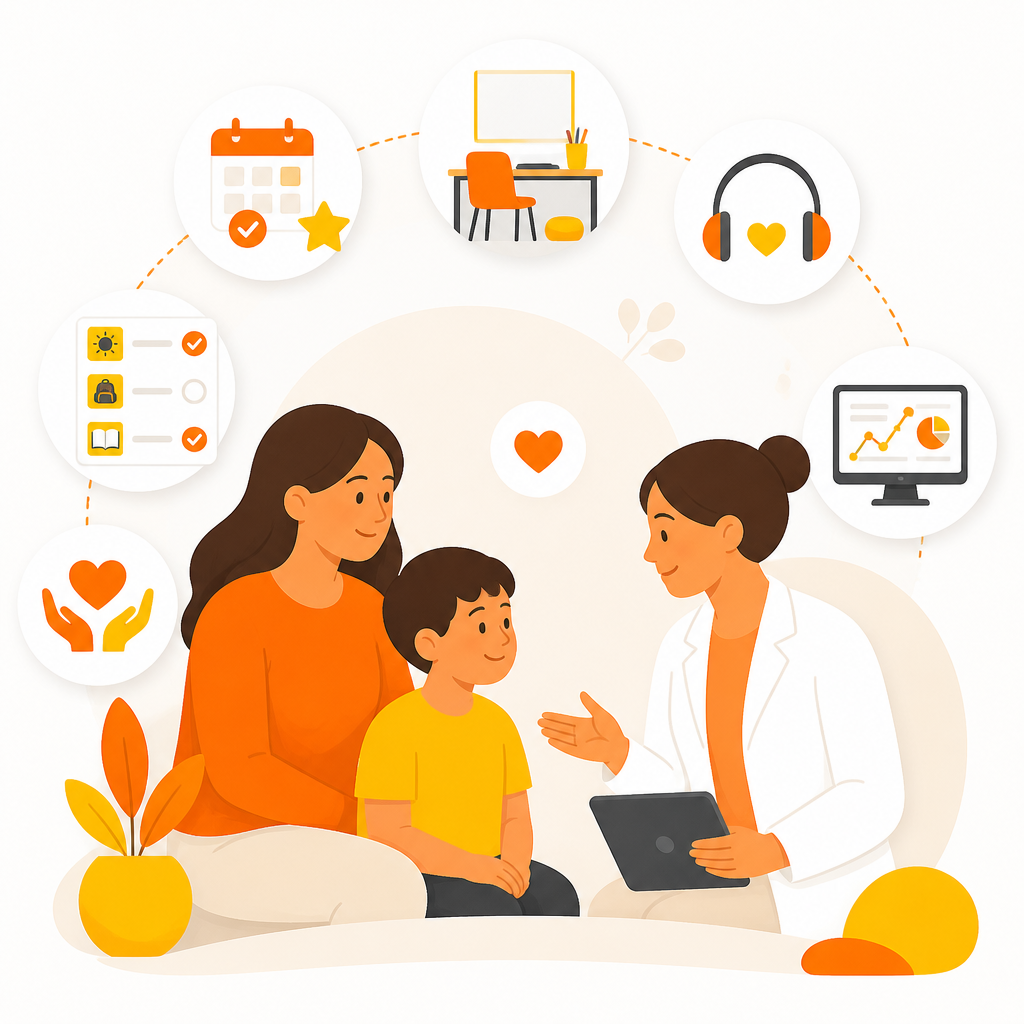
Treatment & Support Options (What Families Should Know)
There isn’t a one-size-fits-all ADHD plan. Support often includes a mix of approaches such as:
- Behavioral strategies and parent-guided routines
- School-based supports (classroom accommodations when appropriate)
- Skills-building for organization, task completion, and self-regulation
- Therapy (as recommended)
- Medication in some cases—managed by the appropriate clinician and monitored carefully
Your pediatric team can help you understand what’s reasonable, what’s evidence-based, and what support may help your child right now.
What Parents Can Do Today (Practical Support at Home)
These strategies can help whether your child is already being evaluated or you’re preparing for an appointment:
- Use simple, one-step instructions (then repeat and confirm).
- Create predictable routines (visual schedules often help).
- Break tasks into short chunks with clear “finish lines.”
- Build in movement breaks during transitions and long tasks.
- Use positive reinforcement for effort and follow-through, not only outcomes.
- Reduce distractions during homework (quiet space, fewer screens).
- Support sleep consistency—restlessness and inattention worsen when sleep is short.
- Communicate with teachers about what you’re seeing and what classroom structure helps.
If you want, your pediatrician can also help you tailor strategies to your child’s specific needs.
Frequently Asked Questions
1) Is ADHD common in children?
Yes. ADHD is one of the most common neurodevelopmental conditions seen in childhood, and many kids benefit from early support.
2) Can ADHD symptoms start in preschool?
They can. Preschoolers may show restlessness, difficulty following routines, and challenges with attention and impulse control—especially when patterns persist.
3) How do I know if it’s ADHD or “just behavior”?
ADHD is typically about persistent patterns that affect functioning across settings. A pediatric evaluation helps distinguish between ADHD and other contributors.
4) Do I need to wait for school problems before seeing a pediatrician?
No. If your child is struggling at home with daily routines, task completion, or emotional regulation, it’s appropriate to reach out early.
5) What does primary care do for ADHD concerns?
Primary care can screen, review developmental history, provide guidance, and help with referrals or next steps when needed.
6) What if my child only struggles in one setting?
Sometimes symptoms are context-dependent. We’ll help you understand patterns and whether additional evaluation is warranted.
Get Support From Family-Centered Pediatric Primary Care
If you’re a parent in Orlando, FL, noticing signs of inattention, hyperactivity, impulsivity, disorganization, or trouble completing tasks, Powers Pediatrics can help you take the next step.
Every child develops at their own pace—but early guidance matters. We’ll listen, screen, guide, and support you with a plan built for your family.
Request an appointment with Powers Pediatrics to discuss your child’s developmental concerns and ADHD-related symptoms.