

Social Development Milestones & When to Call
If you’re worried your child isn’t connecting with others the way you expected—or you’re noticing changes in play, communication, friendships, or emotional responses—you’re not alone.
Every child develops at their own pace—but early guidance matters. At Powers Pediatrics, we support families across Orlando, FL with family-centered pediatric care, developmental guidance, screenings, and referrals when needed—so you can feel confident about what to do next.
- Recognize common social development concerns
- Understand what social milestones often look like by age
- Know when to talk to your pediatrician
- Get practical strategies you can use at home right away
Key Points for Parents (Quick Take)
It’s okay to bring up concerns early.
You don’t need a diagnosis to ask for help.
Social development includes
play skills, friendships, communication, sharing, emotional connection, and interaction.
Milestones vary
but persistent or worsening concerns deserve attention.
Pediatric visits may include
developmental screening, hearing/vision considerations, and guidance tailored to your child.
Start with small supports
while you plan the next step.
Table of Contents
- What Social Development Means (and Why It Matters)
- Social Milestones by Age (What’s Typical)
- Common Social Development Concerns Parents Notice
- Is It “Just a Phase”? Helpful Ways to Think About It
- When to Talk to a Pediatrician (Timing Guide)
- How Powers Pediatrics Can Help
- Practical At-Home Strategies to Support Social Skills
- Using the Patient Portal: Account Settings for Parents
- FAQs
- Ready to Get Support?
Tip: Talk to your pediatrician any time you have a concern—you don’t need perfect proof.
What Social Development Means (and Why It Matters)
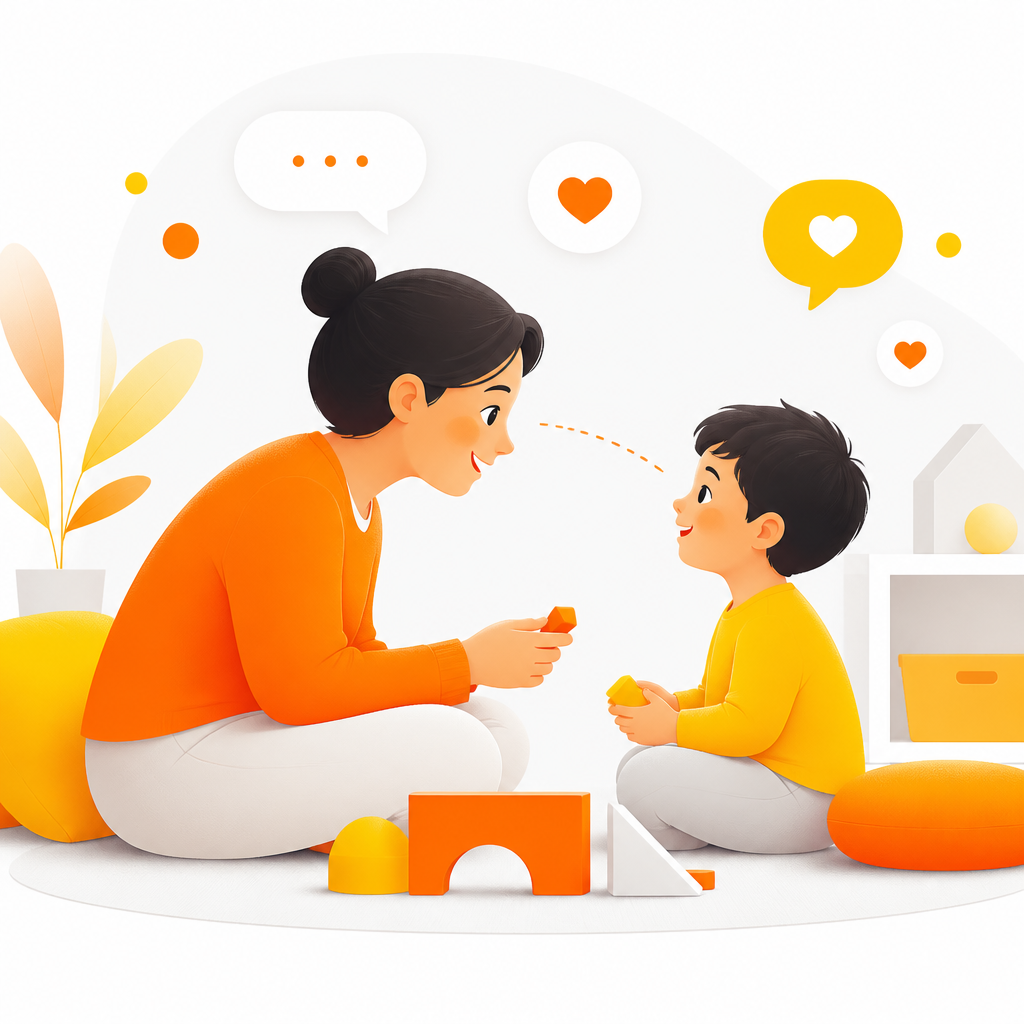
Social development is how a child learns to connect and communicate with others. It shows up in everyday moments like:
- Making eye contact and responding to your voice
- Wanting to play and sharing attention
- Copying actions and taking turns
- Showing emotions appropriately (or struggling to regulate them)
- Engaging with siblings, peers, and adults
- Communicating needs, wants, and feelings
Strong social development helps children build:
- Friendships and peer relationships
- Learning readiness (following directions, joining group play)
- Confidence and emotional safety
- Better communication over time
Social Milestones by Age (What’s Typical)
Below are typical milestone examples. Every child is different—some learn earlier or later. Use this as a compass, not a checklist. If you’re concerned, bring it up.
Infants (0–12 months)
Often you may see:
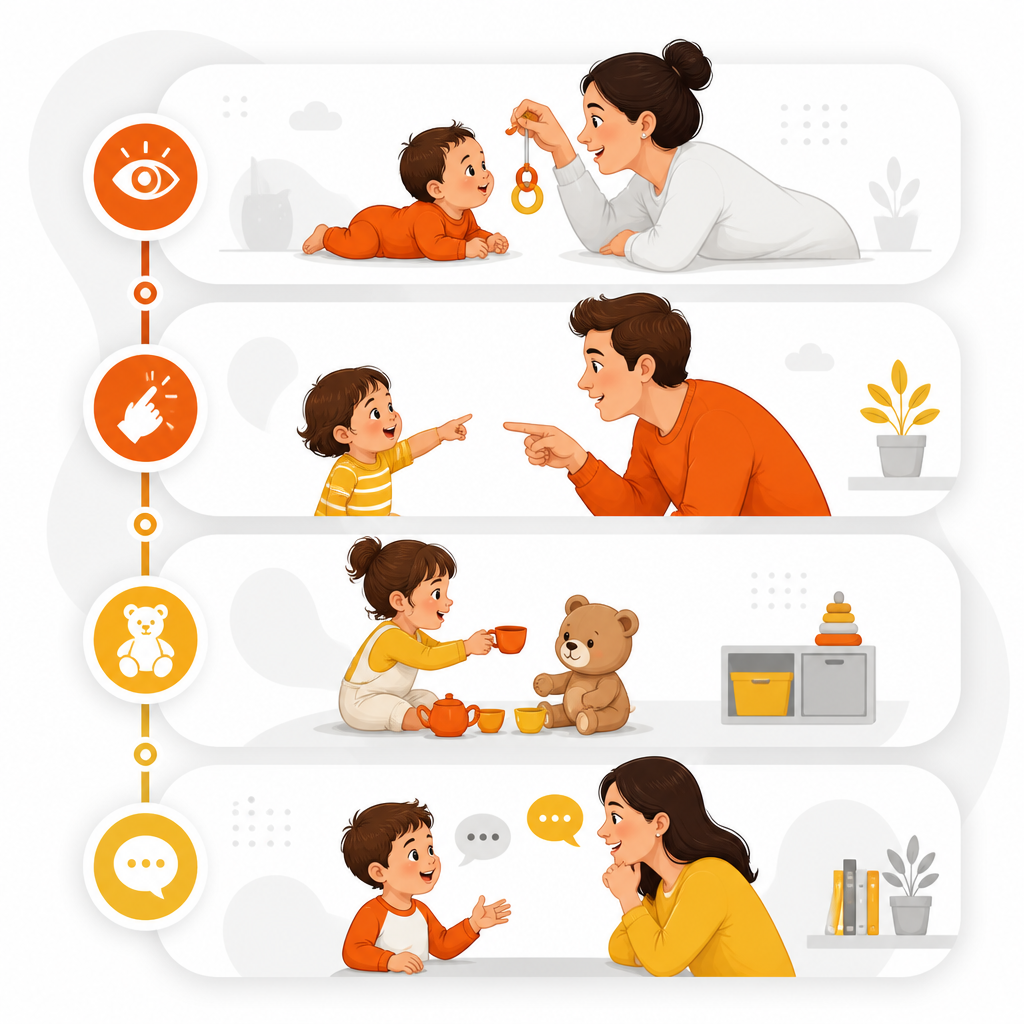
- Smiling socially (often by ~2 months)
- Responding to familiar voices
- Enjoying back-and-forth “talking”
- Reaching toward caregivers
- Showing interest in faces and shared attention
Consider discussing with your pediatrician if you notice:
- No or minimal response to sounds/voice (could also relate to hearing)
- Limited eye contact or social engagement
- No gestures (like waving/pointing) as your baby gets closer to 12 months
Toddlers (12–24 months)
Often you may see:
- Pointing to show interest (“Look!”)
- Copying simple actions
- Beginning to use words or meaningful communication (even if not perfect)
- Playing beside you or with you (parallel play)
Consider discussing if:
- Your child rarely seeks connection or seems disconnected from people
- Limited gestures or communication
- Social play seems very limited compared to peers, or concerns are growing
Preschool (2–4 years)
Often you may see:
- More interactive play (sharing ideas in play)
- Pretend play (feeding a doll, making up games)
- Turn-taking in simple games (with support)
- Interest in other children—sometimes with help to manage big feelings
Consider discussing if:
- Pretend play is minimal or absent
- Your child struggles intensely with transitions and play routines to the point it limits interaction
- There’s a major mismatch between social interest and social ability (for example: “wants friends” but cannot engage, or avoids peers consistently)
Pre-K to early school age (4–6 years)
Often you may see:
- Increased cooperation and group play
- Learning friendship skills: waiting, sharing, negotiating, repairing conflicts
- More emotion labeling (“I’m mad/sad/scared”) and problem solving
- More two-way conversation
Consider discussing if:
- Social difficulties interfere strongly with school or play
- Communication challenges continue to limit friendships
- Emotional outbursts are frequent and hard to soothe even with support
Common Social Development Concerns Parents Notice
Many parents describe concerns that fall into a few common themes. If any feel familiar, it’s worth talking with your pediatrician.
Play skills
- Prefers solitary play most of the time
- Difficulty joining pretend play
- Repetitive play that doesn’t broaden over time
Friendships and interaction
- Limited interest in peers
- Struggles to initiate or join play
- Difficulty reading social cues (turn-taking, personal space, group rules)
Emotional connection and regulation
- Intense or frequent emotional meltdowns
- Difficulty calming down
- Less “shared” enjoyment (few smiles/laughs with others)
Sharing, turn-taking, and flexibility
- Difficulty waiting
- Frequent conflict during shared play
- Strong distress with changes in routine or play plan
Communication and conversation (social communication)
- Limited back-and-forth interaction
- Difficulty using language for social purposes (asking for help, commenting, responding socially)
- Trouble staying on topic or understanding implied meaning (as kids grow)
Regression (a particularly important concern)
- Losing skills they previously had (social words, gestures, eye contact, play behaviors)
Important: These signs don’t automatically mean a specific diagnosis. They do mean: your child may benefit from evaluation and support.
Is It “Just a Phase”? Helpful Ways to Think About It
Sometimes social differences are related to:
- Temperament (some kids are naturally cautious)
- Big life changes (moves, daycare change, family stress)
- Sleep issues and fatigue
- Anxiety or sensory sensitivities
- Language delays
- Hearing or vision problems
A helpful parent check:
- Does the behavior improve with support and repeated practice?
- Is the concern consistent across settings (home, daycare, with family)?
- Is the intensity increasing over time or just occasional?
- Is your child missing key opportunities to practice social skills (because it’s too hard or too stressful)?
If you’re uncertain, that uncertainty is enough reason to ask.

When to Talk to a Pediatrician (Timing Guide)
Talk to your pediatrician any time you have a concern. You don’t need to wait for “perfect proof.”
You should be especially proactive if:
- A milestone feels significantly behind what you expected
- Social skills are causing distress or limiting friendships/school participation
- Your child has frequent emotional outbursts related to interaction or changes
- You’re seeing regression in skills
- Other caregivers (daycare, relatives, teachers) are noticing concerns too
Quick timing idea:
If concerns have lasted several weeks to a few months without improvement—or are worsening—schedule a visit for developmental guidance.
How Powers Pediatrics Can Help
At Powers Pediatrics, we take a family-centered approach. That means we listen to your observations, understand your child’s strengths and challenges, and help you make a plan you can follow at home and in the community.
What a developmental-focused visit may include
- Detailed parent history: what you’ve noticed, when it started, how it shows up
- Growth and general health check: because physical factors can affect social behavior
- Developmental screening: to clarify what areas need support
- Guidance and next steps: including resources, monitoring plans, and referrals when needed
When referrals may be recommended
Depending on the situation
- Speech and language therapy
- Occupational therapy (especially for sensory and regulation needs)
- Developmental/behavioral support services
- Educational resources through your child’s school system or early intervention
Options for your family
- Same-day appointments and walk-ins (when available)
- Online appointment requests
- Telemedicine options for developmental guidance
- Care for children from newborns through young adults
- Insurance-friendly support (including Medicaid and most major insurance)
Practical At-Home Strategies to Support Social Skills
While you’re arranging evaluation or guidance, you can often build social practice into daily routines. The goal isn’t pressure—it’s low-stress repetition and positive connection.
Try “follow their lead” for connection
- Notice what your child is already interested in
- Join their play briefly (one extra action, not a full takeover)
- Pause and wait—allow them to initiate responses
Build shared attention (“Look with me”)
- Use bubbles, pictures, animal books, or simple toys
- Say the same phrase while pointing (“Let’s look!”)
- Celebrate any attempt to look, point, or respond
Practice turn-taking in short bursts
- Use games with clear turns: rolling a ball, stacking blocks, snack turns
- Keep sessions 1–3 minutes
- Reward calm waiting and small participation
Use “emotion labeling” to improve regulation
- Name what you see: “You look frustrated.”
- Offer a simple support choice: “Do you want a hug or a break?”
- Keep language consistent across caregivers
Expand play without forcing it
- If they only do one type of play: Add one tiny variation: “Same!” then “Now try this.”
- If it’s repetitive, make it interactive: “Your turn—my turn!”
Create predictable routines (then add tiny change)
- Use visual schedules or simple reminders
- Change one small piece (the song, the order of steps)
- Help them practice the transition with calm support
Note: If your child becomes overwhelmed quickly, reduce demands and focus on co-regulation first.
Using the Patient Portal: Account Settings for Parents
Powers Pediatrics offers patient portal access, which can make it easier to coordinate care.
When you log in, check your Account settings to ensure you can:
- Receive important messages and appointment updates
- Complete and submit any forms efficiently
- Request guidance or schedule updates through the portal workflow
If you’re unsure how to access the portal or manage updates, ask our team during your next visit or appointment request.
Frequently Asked Questions
1) How do I know if this is a developmental concern or just personality?
Personality can explain some differences (like shyness). But a concern often rises when social challenges:
- Affect daily functioning (school/play/family stress)
- Persist despite support
- Worsen over time
- Include regression or significant communication barriers
2) What if my child makes eye contact sometimes?
Occasional eye contact can happen in many children. What matters is the overall pattern:
- Does your child engage in shared attention?
- Do they respond to social bids (smiles, voice, gestures)?
- Is the social communication consistent across settings?
3) Could this be hearing or vision?
Yes—hearing and vision issues can reduce social responses and make it seem like a child isn’t interested. A pediatric evaluation can help rule out or identify contributing factors.
4) Should we wait until preschool/teacher feedback?
It can be helpful information, but you don’t have to wait. Early guidance can start well before formal settings, and earlier support often improves outcomes.
5) What does “developmental guidance” involve?
It can include screenings, developmental milestone review, practical strategies, and—when needed—referrals to therapies or developmental specialists.
6) Does Powers Pediatrics accept insurance and Medicaid?
Yes. Powers Pediatrics accepts Medicaid and most major insurance, and helps families explore the best path forward.
Ready to Get Support?
If you’re a parent in Orlando, FL wondering whether your child’s social development is on track—or if you’re seeing changes in play, friendships, emotional connection, sharing, communication, or interaction— Powers Pediatrics is here for you.
Every child develops at their own pace—but early guidance matters. Schedule a developmental-focused appointment to review milestones, discuss your concerns, and build a supportive next-step plan.
Start now by requesting an appointment online or contacting our team for guidance.